19:54
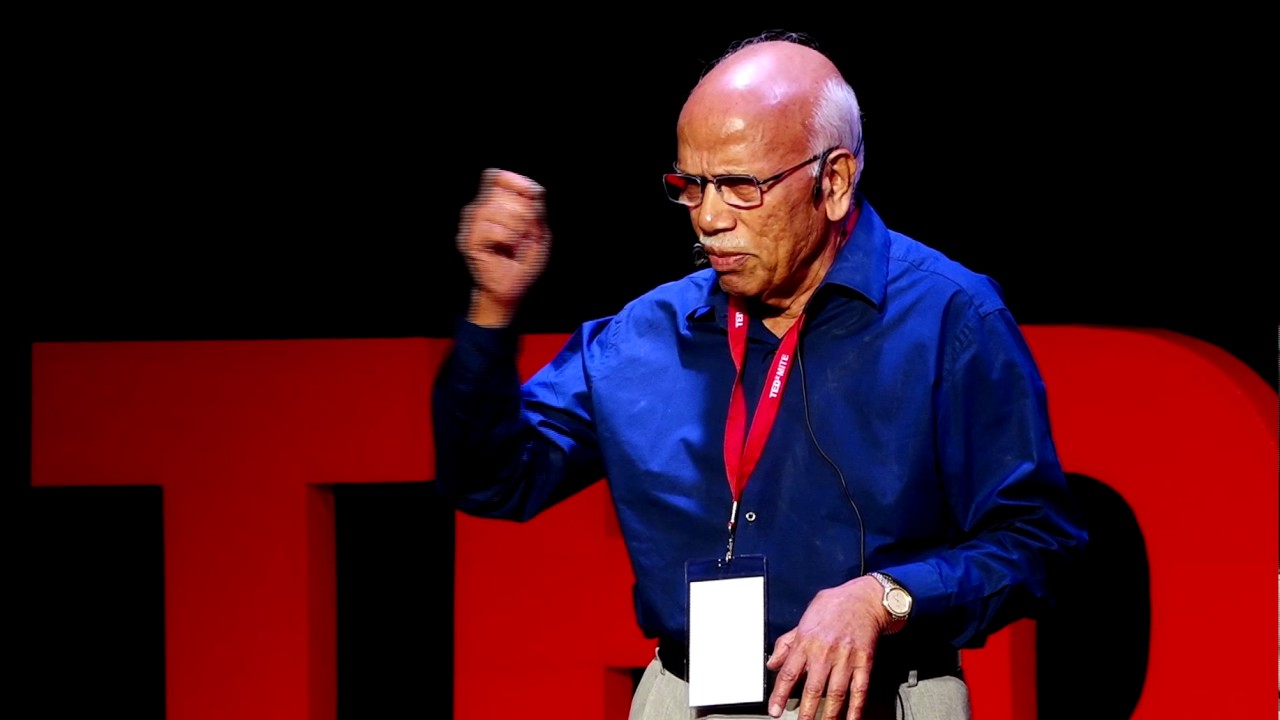
Ayurveda Over Western Medicines | Dr. B.M HEGDE | TEDxMITE
TEDx Talks
Overview
This video contrasts the reductionist, symptom-focused approach of Western medicine with the holistic, wellness-oriented philosophy of Ayurveda. It argues that Western medicine's reliance on quick fixes and pharmaceuticals leads to adverse drug reactions and high costs, while Ayurveda, rooted in ancient wisdom and a quantum physics worldview, emphasizes understanding the body as a connected system and maintaining health. The speaker advocates for a future of 'meta-medicine,' a judicious combination of various healing systems, including Western medicine for emergencies, to provide comprehensive and sustainable healthcare.
How was this?
Save this permanently with flashcards, quizzes, and AI chat
Chapters
- Science is dynamic and changes; anything static is not science.
- Modern physics (quantum physics) offers a new perspective that challenges older scientific models.
- The human body is not a collection of separate parts like a machine, but a colony of trillions of interconnected cells.
- The feeling of 'we' (interconnectedness) promotes wellness, while the feeling of 'I' (individuality) can lead to illness.
Understanding the body as an interconnected system, rather than a machine, is fundamental to grasping the limitations of reductionist medicine and the principles of holistic approaches.
The speaker explains that we are not a single 'I' but a 'we,' a colony of 120 trillion human cells, and that this interconnectedness is key to wellness.
- Our bodies host 10 times more germ cells than human cells, and these germs are essential for survival, not enemies.
- Genetic inheritance from parents (23,000 genes) is minimal compared to the influence of germ genes (2.5 trillion).
- The environment, rather than just genes, plays a crucial role in health and disease.
This challenges the common perception of germs as solely harmful and highlights the significant, often overlooked, influence of our internal microbial environment and external factors on our health.
The speaker states that for every 120 trillion human cells, we have 360 trillion germ cells, emphasizing their symbiotic relationship.
- Western medicine often provides 'quick fixes' that address symptoms but create new problems (adverse drug reactions).
- Adverse drug reactions are a leading cause of death in Western countries.
- Prescribing multiple drugs (polypharmacy) lacks scientific understanding of interactions and leads to low patient compliance.
- Common painkillers (NSAIDs) can cause heart attacks and kidney damage, illustrating the hidden dangers of pharmaceuticals.
This section exposes the potential harms and ineffectiveness of relying solely on pharmaceutical interventions, urging a critical evaluation of conventional treatment approaches.
The speaker notes that painkillers (NSAIDs) can lead to heart attacks up to five years later and are a common cause of kidney dialysis.
- Western medicine's approach is often reductionist, focusing on isolated parts (like a biopsy) rather than the whole system.
- This reductionist view struggles to understand complex conditions like cancer, where a cancer cell functions similarly to a normal cell.
- Ayurveda, originating from ancient wisdom, aligns with a holistic worldview that considers the entire system and its environment.
- Quantum physics supports this holistic view, suggesting that reality is far more complex and interconnected than our five senses perceive.
Understanding the difference between reductionist and holistic approaches is crucial for appreciating why different medical systems may offer vastly different explanations and treatments for the same condition.
The speaker uses the analogy of trying to understand a bird by killing it and studying its cells, comparing it to how Western medicine analyzes a cancer biopsy without understanding the living cell.
- Consciousness (mind) is not located in the brain but is a vast, pervasive aspect of our being, connected to universal consciousness.
- Quantum physics confirms ancient Indian wisdom: matter and energy are interchangeable (E=mc²), and the body is fundamentally energy.
- Illness arises when this fundamental energy is altered or unbalanced.
- Ayurveda's primary goal is 'swasthasya swasthya rakshitam' – preserving the wellness of the healthy, which is more effective and less costly than treating disease.
This chapter introduces the concept of the body as energy and the importance of consciousness, shifting the focus from disease treatment to proactive wellness maintenance.
The speaker references Upanishadic verses that describe the body as energy, not just matter, and highlights that Ayurveda focuses on preserving health rather than just curing illness.
- Ayurveda views the human body as a closed system with an innate healing capacity (immune system).
- Western medicine, by contrast, often treats the body as an open system requiring constant external intervention.
- Ayurveda is gaining popularity in the West due to the unsustainability and high cost of Western medicine.
- The concept of 'quantum healing' suggests that by altering the energy blueprint, one can achieve healing.
This highlights why Ayurvedic principles are becoming increasingly relevant and sought after globally as a more sustainable and potentially effective approach to health.
The speaker mentions that Germans and Eastern European nations are actively seeking to establish Ayurvedic hospitals due to the limitations and costs of Western medicine.
- Western medicine is essential for emergency interventions (e.g., setting broken bones, ICU care), representing about 2% of healthcare needs.
- The remaining 98% of health needs can be managed by alternative systems like Ayurveda, homeopathy, Siddha, and Unani.
- The future of medicine ('meta-medicine') lies in a judicious combination of different systems, not a monopoly of one.
- This integrated approach must be scientifically authenticated to avoid quackery and ensure effectiveness.
This chapter proposes a practical path forward, advocating for a synergistic integration of medical knowledge to create a more comprehensive, affordable, and effective healthcare system.
The speaker suggests that emergency care should come from Western medicine, while all other health management can be addressed by various alternative systems, forming a new 'meta-medicine'.
Key takeaways
- The human body is a complex, interconnected system, not a mere machine, and viewing it holistically is key to understanding health.
- Germs are essential partners in our survival, challenging the traditional view of them as solely enemies.
- Pharmaceutical 'quick fixes' in Western medicine can lead to significant adverse effects and may not address the root cause of illness.
- Ayurveda's focus on preserving wellness and understanding the body as a self-healing, closed system offers a powerful alternative to disease-centric approaches.
- The fundamental nature of the body is energy, and imbalances in this energy, influenced by consciousness and environment, lead to disease.
- The future of healthcare likely involves integrating the strengths of Western medicine (for emergencies) with the wisdom of traditional and alternative systems.
- A scientifically validated, combined approach ('meta-medicine') holds the promise of more effective and sustainable healthcare for humanity.
Key terms
ReductionismHolismQuantum PhysicsAyurvedaWestern MedicineAdverse Drug Reaction (ADR)ConsciousnessEnergy-Matter InterchangeClosed SystemOpen SystemMeta-Medicine
Test your understanding
- How does the speaker's view of the human body as a 'colony of cells' differ from the machine analogy used in Western medicine?
- What are the primary criticisms the speaker levels against the 'quick fix' approach of Western medicine?
- Explain the concept of the human body as a 'closed system' in Ayurveda and contrast it with the 'open system' view in Western medicine.
- Why does the speaker suggest that the future of medicine should be a combination of different systems, and what is this combined approach called?
- How does quantum physics, according to the speaker, support the principles of Ayurveda and holistic health?