14:17
A Tour of the Cell
Bozeman Science
Overview
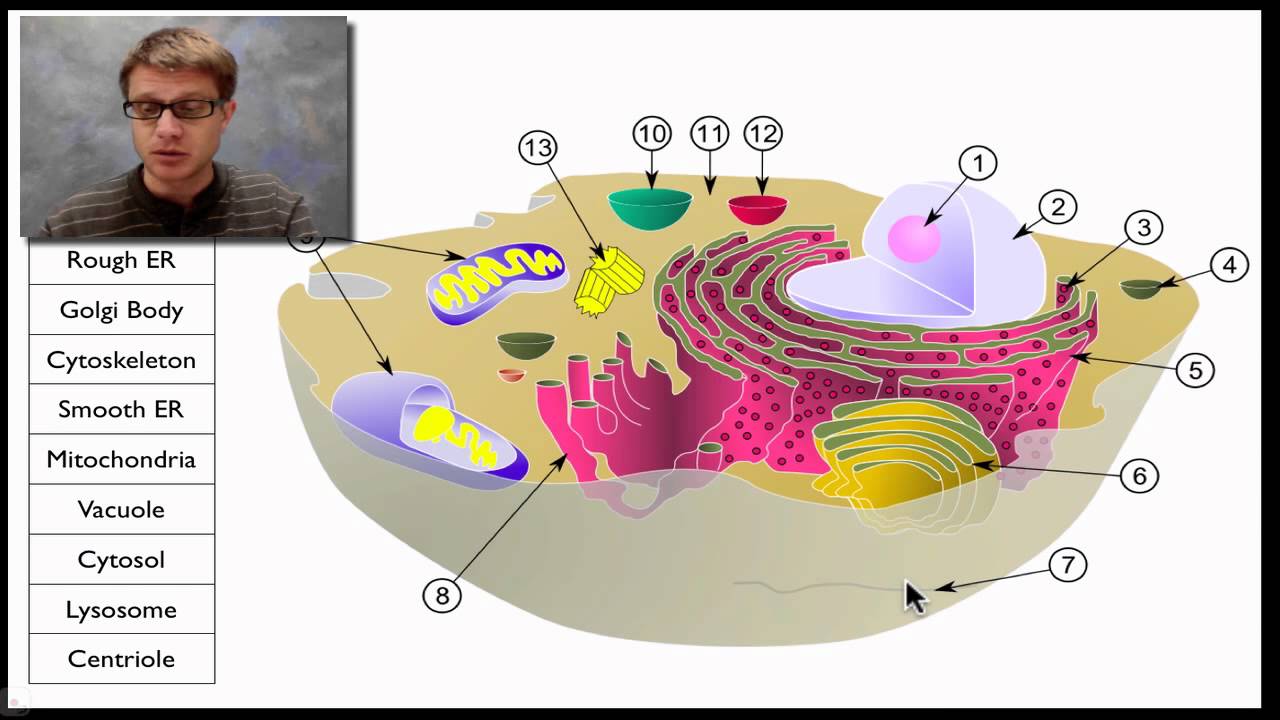
This video provides a comprehensive tour of the cell, explaining why cells are small and the complexity within them. It details the types of microscopes used to observe cells, differentiating between optical and electron microscopes. The summary then distinguishes between prokaryotic and eukaryotic cells, highlighting their key differences and shared components. Finally, it systematically explores the various organelles within a eukaryotic cell, explaining their structure and specific functions, such as the nucleus for genetic material, ribosomes for protein synthesis, and mitochondria for energy production.
How was this?
Save this permanently with flashcards, quizzes, and AI chat
Chapters
- Cells are small because diffusion is the primary method for material transport, and smaller size reduces diffusion distance.
- There's an optimal size range for cells to efficiently house genetic material and cellular machinery.
- Cells are not simple bags of jelly; they contain a complex internal structure called the cytoskeleton, which acts like a transport system for organelles.
Understanding the physical constraints and internal organization of cells is fundamental to grasping how they function and interact within larger organisms.
The cytoskeleton is compared to a monorail system, with motor proteins literally walking along it to move materials.
- Cells were invisible until the invention of the microscope.
- Optical microscopes use light and lenses to magnify, similar to simple magnifying glasses.
- Electron microscopes use magnets to focus beams of electrons, offering much higher magnification and detail, but often requiring specimens to be killed and coated with metal.
The development of microscopy has been crucial for revealing the intricate structures of cells and advancing our understanding of biology.
A magnet held near an old TV screen demonstrates how magnets can alter the path of electrons, analogous to how electron microscopes work.
- Prokaryotic cells (bacteria and archaea) lack a nucleus and are simpler in structure.
- Eukaryotic cells (plants, animals, fungi, protists) possess a nucleus and are generally larger and more complex.
- All cells share fundamental components: nucleic material (DNA), a cell membrane, cytosol, and ribosomes.
Distinguishing between these two fundamental cell types is essential for understanding the diversity of life and the evolutionary history of cells.
A bacterium, if scaled correctly, would be roughly the size of a mitochondrion within a eukaryotic cell, illustrating the significant size difference.
- The nucleolus, within the nucleus, is the site where ribosomal RNA is produced and ribosomes are assembled.
- The nucleus houses the cell's DNA and controls cellular activities by regulating protein synthesis; it has pores for material exchange.
- Ribosomes, composed of small and large subunits, are responsible for building proteins by translating messenger RNA.
The nucleus and ribosomes are central to cellular function, governing genetic information and protein production, respectively.
The nucleus is described as the location of genetic material, rather than just the 'brain' of the cell, emphasizing its role in heredity and control.
- Vesicles are small, membrane-bound sacs used for transporting materials within the cell.
- The rough endoplasmic reticulum (RER), studded with ribosomes, is a factory for synthesizing proteins and producing membranes.
- The Golgi apparatus modifies, sorts, and packages proteins and lipids received from the ER for delivery elsewhere.
- The smooth endoplasmic reticulum (SER) synthesizes lipids, detoxifies substances, and lacks ribosomes.
These interconnected membrane systems are vital for the synthesis, modification, and transport of essential cellular molecules.
The Golgi apparatus functions like a cellular UPS, receiving packages (vesicles), modifying their contents, and sending them out to their destinations.
- The cytoskeleton provides structural support, shape, and facilitates cell movement, composed of microtubules and microfilaments.
- Mitochondria generate ATP (energy currency) through a process involving folded inner membranes, and are thought to have originated from endosymbiosis.
- Vacuoles in plant cells store water and maintain turgor pressure; in animal cells, they are smaller and involved in transport.
- Lysosomes contain digestive enzymes to break down waste materials and cellular debris, playing a role in programmed cell death (apoptosis).
These organelles are critical for maintaining cell integrity, generating energy, managing cellular waste, and enabling cellular processes like division.
Mitochondria have their own DNA and replicate independently, supporting the theory that they were once free-living bacteria incorporated into eukaryotic cells.
- Cytosol is the fluid portion of the cytoplasm, containing dissolved solutes and exhibiting complex concentration gradients.
- Centrioles, part of the centrosome, are involved in organizing the cell's internal structure and are crucial for forming the spindle apparatus during cell division.
Understanding the cytosol and centrioles completes the picture of the cell's internal environment and its mechanisms for reproduction.
Centrioles help determine the positioning of other organelles and initiate the formation of the spindle fibers that separate chromosomes during cell division.
Key takeaways
- Cell size is limited by the efficiency of diffusion for nutrient uptake and waste removal.
- Microscopes are essential tools that have revealed the complex, non-jelly-like nature of cells.
- Prokaryotic and eukaryotic cells represent two fundamental organizational strategies in life, with eukaryotes possessing a nucleus and membrane-bound organelles.
- Organelles within eukaryotic cells perform specialized functions, working together like a highly organized factory and logistics system.
- The nucleus stores genetic information, while ribosomes are the protein synthesis machinery.
- The endomembrane system (ER, Golgi) processes and transports proteins and lipids.
- Mitochondria are the powerhouses of the cell, generating ATP, and may have originated from symbiotic bacteria.
- The cytoskeleton provides internal structure and facilitates movement, while lysosomes handle waste disposal and programmed cell death.
Key terms
DiffusionCytoskeletonMicroscopeOptical MicroscopeElectron MicroscopeProkaryotic CellEukaryotic CellNucleusRibosomeEndoplasmic Reticulum (ER)Golgi ApparatusMitochondriaLysosomeCentriole
Test your understanding
- Why is cell size limited, and how does diffusion play a role in this limitation?
- What are the fundamental differences between prokaryotic and eukaryotic cells, and what essential components do all cells share?
- How do the rough ER and Golgi apparatus work together to process and transport proteins within a eukaryotic cell?
- What is the primary function of mitochondria, and what evidence supports their proposed evolutionary origin?
- How do lysosomes contribute to both cellular maintenance and programmed cell death (apoptosis)?