1:31:39
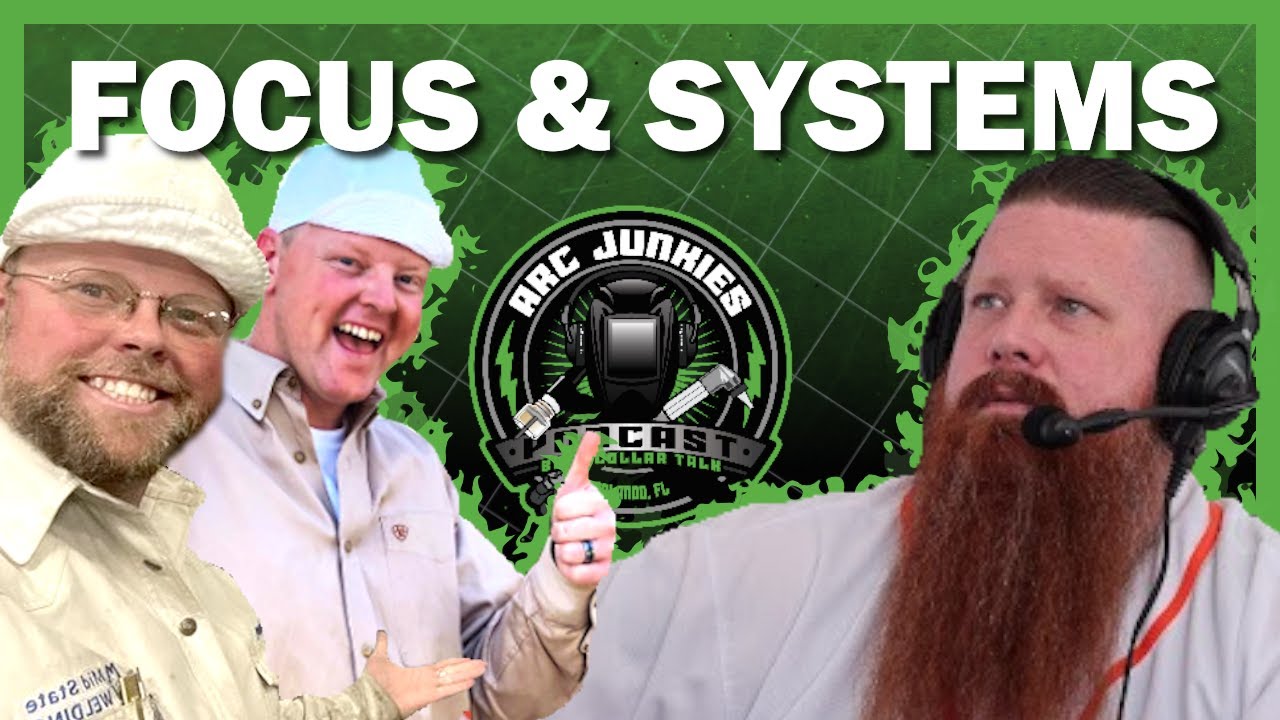
Focus and Systems w/ Rodney and Austin Ross
Arc Junkies Podcast
Overview
This episode features Rodney and Austin Ross discussing their extensive experience in the pipeline welding industry, their transition into entrepreneurship, and insights gained along the way. They share advice for aspiring welders, emphasizing the importance of foundational skills, work ethic, and financial management. The conversation delves into the challenges and rewards of running a business, the necessity of delegation and systems, and strategies for building a strong team. They also touch upon their personal journeys, the evolution of their careers, and the lessons learned from both successes and setbacks in the demanding world of welding and business.
How was this?
Save this permanently with flashcards, quizzes, and AI chat
Chapters
- Rodney and Austin Ross began their welding journeys through vocational training in high school, learning essential pipe welding techniques.
- Initial opportunities in the oil and gas industry, such as drilling rigs, provided crucial experience and income.
- The pipeline industry demands specific skills, often starting with foundational stick welding (6010/718) and progressing through various welding processes.
- Early career earnings in the industry, like $40/hour in the early 2000s, were significant compared to other labor jobs like concrete work.
Understanding the foundational skills and early career paths highlights the practical experience required to enter and succeed in specialized fields like pipeline welding.
Learning to TIG root and hot pass, followed by 718 fill and cap, or mastering uphill 6010 and 718 welding for the Oklahoma state test.
- Social media often showcases the end results of welding careers (e.g., high pay, nice trucks) without detailing the years of hard work and experience required.
- Aspiring welders need to understand that success in the pipeline industry is a journey, not an overnight achievement.
- Building experience often involves starting at the bottom, performing various tasks, and not being too proud to collect a paycheck for any job.
- The first few years out of school are critical for gaining practical experience before expecting top-tier opportunities or documenting success online.
This section addresses a common misconception fueled by social media, emphasizing that tangible success in welding requires patience, dedication, and a focus on skill development over immediate gratification.
Young welders seeing high pay stubs online without realizing the years of grinding, running beads, and gaining experience that led to those earnings.
- Focus on mastering stick welding (burning rod) as a primary skill for pipeline work.
- Gain broad welding and fabrication experience, even if it's in different processes like MIG, as it all contributes to overall skill.
- Crucially, develop strong money management and investment skills, as pipeline work can be cyclical and unpredictable.
- Consider networking and understanding opportunities, such as starting as a helper if necessary, to gain entry and learn the industry's intricacies.
This chapter provides actionable advice for individuals aiming for a career in pipeline welding, covering both technical skills and essential financial literacy.
Learning to manage money and invest savings to weather the inevitable slow periods in the pipeline industry.
- Deciding whether to commit fully as a welder or start as a helper is a key decision, especially without prior connections.
- Being a helper can be a valuable way to get a foot in the door, learn the operations, and build a network, particularly if you don't know anyone.
- Networking is paramount; connections made through welding school or previous jobs can lead to opportunities.
- While some may get direct welder roles, understanding that helper positions can be a stepping stone is important, but be wary of being pigeonholed.
This section clarifies the different pathways into the pipeline industry and the strategic considerations for new entrants, particularly those without established industry contacts.
Taking a helper position to learn the ropes and network, with the understanding that you might need to seek opportunities elsewhere to transition into a welding role.
- The decision to leave pipeline work often stems from a desire for more family time or a shift in priorities, especially after major life events like the birth of a child.
- The cyclical nature of pipeline work and economic downturns (like in 2020) can prompt welders to seek more stable or self-directed opportunities.
- Transitioning involves identifying needs in the local market, such as fabrication services, and leveraging existing skills and equipment.
- While lucrative, entrepreneurship requires a significant commitment and can be tempting to return to the quick money of pipeline work, but momentum is key.
This chapter explores the motivations and challenges behind transitioning from a traveling pipeline welder to owning and operating a business, highlighting the shift in focus and risk.
Starting a fabrication business after realizing a local need for welding services and leveraging connections made during previous work experiences.
- Running a business requires wearing many hats (accountant, technician, manager) and necessitates implementing systems for efficiency.
- Effective delegation is crucial for growth, but it requires trust, clear communication, and empowering team members.
- Developing Standard Operating Procedures (SOPs) for processes like project management, from estimation to invoicing, is vital.
- Investing in employees through training, responsibility, and fair compensation is key to building loyalty and a strong team culture.
This section emphasizes that business success hinges not just on technical skill but on strategic organization, effective delegation, and fostering a motivated team.
Implementing a project status SOP that outlines every step from estimate to invoicing, allowing for better tracking and delegation of tasks.
- Utilizing business management software (like JobTread or Odoo) can streamline operations, scheduling, and client management.
- Continuous learning, including reading books on business and entrepreneurship, provides valuable insights and strategies.
- The 'entrepreneur, manager, technician' model highlights the need to balance hands-on work with business development.
- Delegating tasks, even to part-time help or students, is essential to avoid burnout and scale the business effectively.
This chapter underscores the importance of adopting modern business tools and embracing a mindset of continuous learning to adapt and thrive in a competitive landscape.
Using software like JobTread to manage project workflows, scheduling, and client communication, freeing up time for strategic business growth.
- Building positive morale through lightheartedness and recognition is important for team cohesion.
- Finding employees who share the company's vision and work ethic is challenging but rewarding.
- The industry faces challenges with employee loyalty, often driven by small wage differences, which employers and employees contribute to.
- Ultimately, creating a workplace where employees feel valued, have opportunities for growth, and are rewarded for their efforts is key to retention and success.
This final chapter addresses the human element of business, focusing on how company culture, employee morale, and mutual respect impact long-term success and industry sustainability.
Implementing a practice where colleagues applaud a team member arriving just a minute late, turning a potential negative into a lighthearted morale booster.
Key takeaways
- Mastering foundational welding skills, particularly stick welding, is crucial for entering specialized fields like pipeline welding.
- Social media often presents an unrealistic view of success; building a career requires years of dedicated experience and hard work.
- Financial literacy and money management are as critical as technical skills for welders, especially in industries with fluctuating work availability.
- Networking and building relationships are essential for career advancement and finding opportunities, particularly when starting out.
- Transitioning from a traveling trade to entrepreneurship involves significant shifts in focus, requiring systems, delegation, and a strong team.
- Effective delegation and implementing business systems are vital for scaling a business and preventing burnout.
- Investing in employees through training, fair treatment, and opportunities for growth fosters loyalty and a positive company culture.
- Continuous learning, both in technical skills and business management, is key to adapting and succeeding in the evolving welding industry.
Key terms
Pipeline WeldingVocational TrainingStick Welding (6010/718)TIG WeldingMIG WeldingFabricationMoney ManagementEntrepreneurshipDelegationSystemsStandard Operating Procedures (SOPs)Company CultureMoraleNetworkingJobTreadOdoo
Test your understanding
- What are the primary stick welding processes mentioned as foundational for pipeline work?
- Why is financial management considered as important as technical welding skills for pipeline welders?
- How can aspiring welders gain entry into the pipeline industry if they lack prior connections?
- What are the key challenges and strategies involved in transitioning from a traveling welding career to owning a business?
- How does effective delegation contribute to the growth and sustainability of a welding business?