5:44
AICE International History chapter 4.3 review
Juliana Fernandez
Overview
This video explains why the Chinese Communist Party (CCP) gained support up to 1945, focusing on key events and strategies. It details the Long March's transformation into propaganda, the establishment of the Yan'an Soviet with land reforms and Mao's consolidation of power through the rectification campaign, and how the war against Japan inadvertently boosted CCP popularity. The video also contrasts the CCP's growing appeal with the increasing unpopularity of the Nationalist Kuomintang (KMT) due to corruption, failed reforms, and ineffective leadership, setting the stage for the eventual civil war.
How was this?
Save this permanently with flashcards, quizzes, and AI chat
Chapters
- The Long March, despite heavy losses, was reframed through propaganda as a heroic feat, establishing Mao's leadership and the CCP's resilience.
- Mao's 'Eight Points for Attention' instructed soldiers to respect peasants, crucial for winning rural support.
- Mao advocated for a peasant-led revolution, differing from rivals who favored a proletariat-based approach, due to China's limited industrialization.
- The CCP aimed to gain peasant support by addressing their needs and to secure Mao's undisputed leadership within the party.
Understanding the Long March's propaganda value and Mao's strategic focus on peasants is key to grasping the CCP's early appeal and its foundational ideology.
Propaganda exaggerated hardships and victories, like the Luding Bridge incident, to inspire support, particularly among peasants.
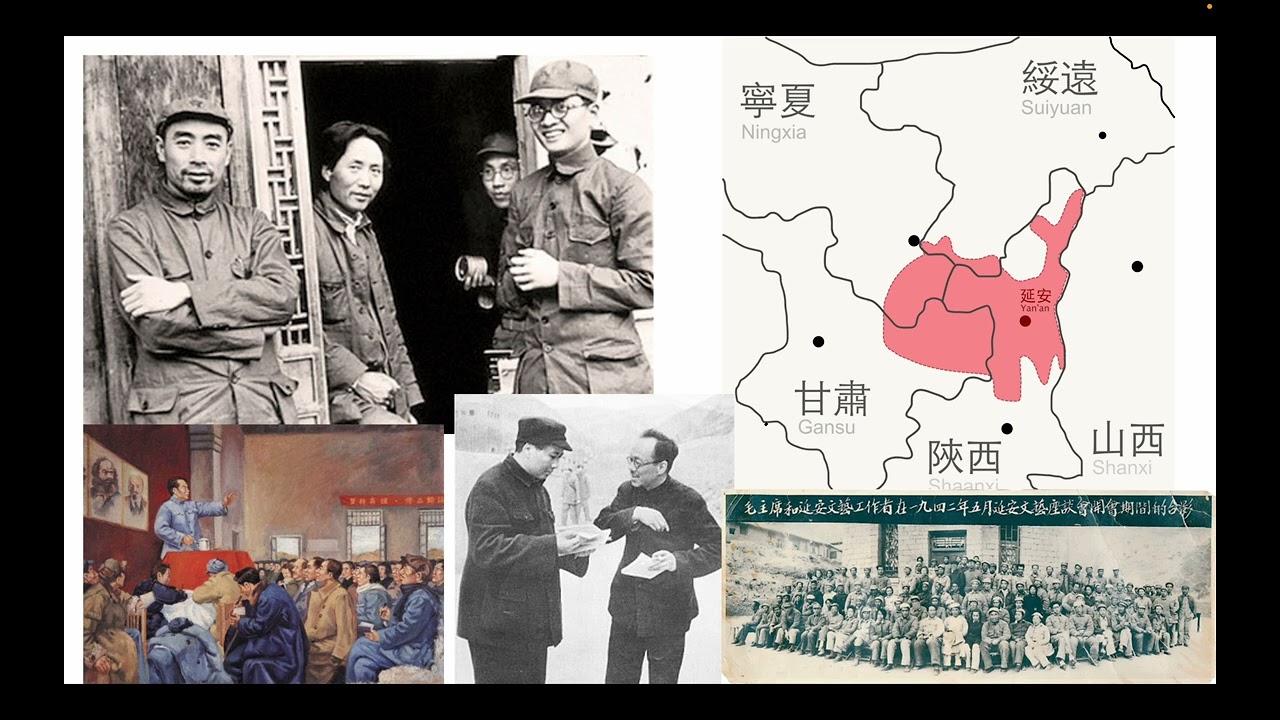
- The Yan'an Soviet served as the CCP's headquarters, where members integrated with peasants, offering services and gaining popularity.
- Land reform policies redistributed landlord land to peasants, addressing widespread landlessness and high rents.
- Mao's Rectification Campaign (1941-1944) purged internal opposition, consolidating his absolute leadership within the CCP through intense study sessions and purges.
- Foreign visitors' positive reports of the Yan'an Soviet were often curated by the CCP, masking negative aspects like forced land seizures.
This period solidified the CCP's base of operations, refined its governance model, and eliminated internal dissent, paving the way for its national expansion.
During the Rectification Campaign, members were encouraged to critique Mao, but those who did were arrested, accused of individualism, and purged, sometimes leading to torture and forced suicides.
- The Sino-Japanese War (starting 1937) provided opportunities for CCP propaganda, contrasting their nationalist image with the KMT's perceived failures.
- The CCP replicated the Yan'an Soviet model in rural areas, expanding their influence and isolating KMT-controlled cities.
- While the KMT bore the brunt of early resistance, the CCP's guerrilla tactics and propaganda exaggerated their military successes, attracting patriotic recruits.
- Dissatisfaction with KMT policies among urban workers and small businessmen drew them towards the CCP's methods.
The war against Japan, while devastating, inadvertently became a powerful tool for the CCP to expand its territory, recruit members, and discredit its main rival, the KMT.
The CCP exploited the KMT's inability to protect citizens during atrocities like the Nanking Massacre, using it to portray themselves as the true nationalist force.
- The KMT failed to implement promised reforms, leading to continued dire conditions for peasants and workers, with land concentrated among the wealthy.
- Widespread corruption, particularly in the opium trade, and a lack of democratic progress eroded public trust.
- The KMT's ineffective propaganda and repression contrasted sharply with the CCP's effective mobilization and messaging.
- The KMT's inability to defend China against Japanese aggression further diminished its legitimacy and support.
The KMT's internal weaknesses, corruption, and failures in governance and defense created a vacuum that the CCP effectively filled.
Despite implementing some laws like child labor regulations, the KMT's reforms were poorly enforced, leaving millions of peasants landless and unemployed by 1934.
Key takeaways
- Propaganda and narrative control were essential tools for the CCP, transforming military setbacks like the Long March into sources of strength and legitimacy.
- Mao's strategic focus on peasant needs and support was a critical factor in the CCP's growing influence in rural China.
- Internal party discipline and the elimination of rivals, as seen in the Yan'an Rectification Campaign, were crucial for Mao's consolidation of power.
- The CCP effectively leveraged the war against Japan to enhance its nationalist image and discredit the ruling KMT.
- The KMT's failure to enact meaningful reforms, coupled with corruption and ineffective leadership, significantly undermined its popular support.
- By 1945, the CCP had successfully positioned itself as a viable alternative to the KMT, benefiting from its rival's weaknesses and its own strategic gains.
Key terms
Chinese Communist Party (CCP)Long MarchMao ZedongYan'an SovietLand ReformRectification CampaignKuomintang (KMT)Chiang Kai-shekSino-Japanese WarPropaganda
Test your understanding
- How did Mao Zedong transform the Long March from a military retreat into a propaganda victory?
- What were the key elements of the Yan'an Soviet that increased CCP popularity among peasants?
- Why was Mao's Rectification Campaign significant for his leadership within the CCP?
- How did the war with Japan contribute to the CCP's rise and the KMT's decline?
- What were the main reasons for the Kuomintang's unpopularity by 1945?