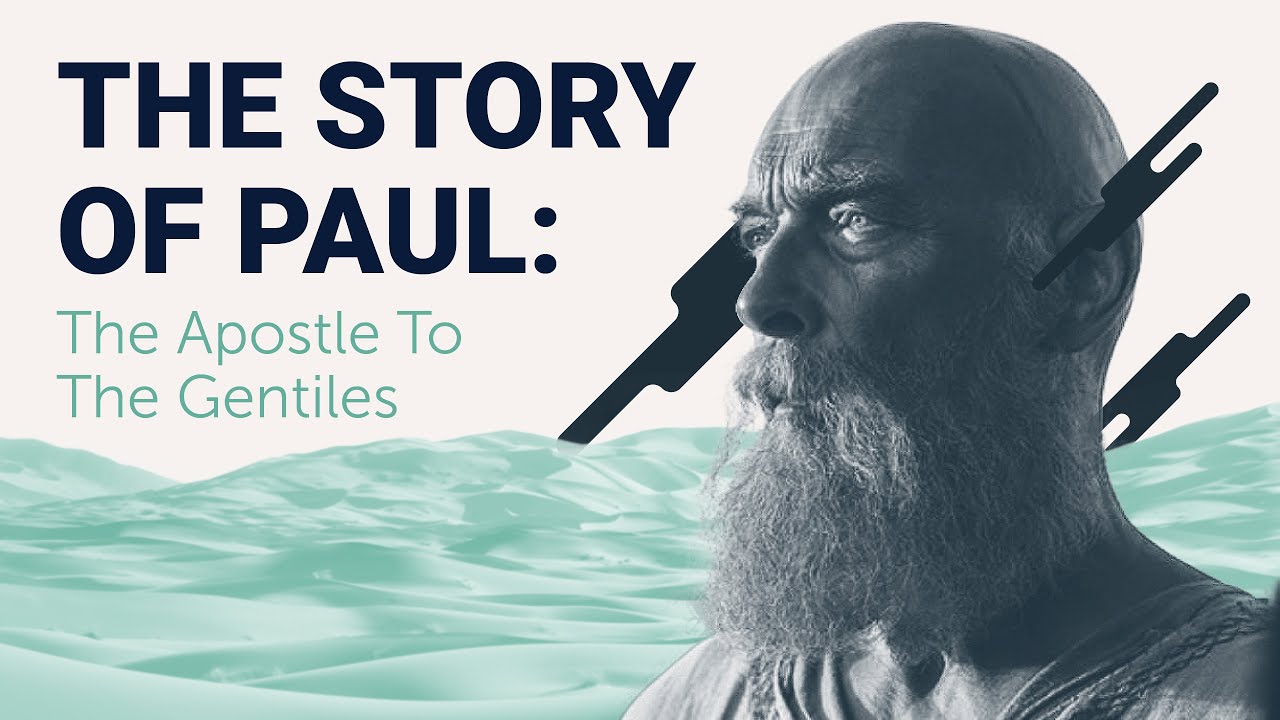
30:13
The Complete Story of Paul: The Apostle to the Gentiles
Bible Unbound
Overview
This video chronicles the life and transformative ministry of Paul, originally Saul of Tarsus, the Apostle to the Gentiles. It traces his journey from a zealous Pharisee who persecuted early Christians to a pivotal figure in spreading Christianity throughout the Roman Empire. The narrative highlights his conversion, theological development, missionary journeys, significant writings, and eventual martyrdom, emphasizing his role in shaping Christian doctrine and making the faith accessible to non-Jewish people.
How was this?
Save this permanently with flashcards, quizzes, and AI chat
Chapters
- Saul was born in Tarsus, a prosperous Roman city, to a Jewish family from the tribe of Benjamin.
- As a Roman citizen, he had access to education and opportunities, while maintaining his Jewish heritage.
- His father, a tentmaker and Pharisee, ensured Saul received rigorous religious training.
- Saul studied under the esteemed Rabbi Gamaliel, a leading Pharisee, for about eight years, learning to interpret Jewish law for contemporary life.
Understanding Saul's background as a Roman citizen and a highly educated Pharisee is crucial to grasping the depth of his later transformation and his unique ability to engage with both Jewish and Gentile audiences.
Saul's education under Rabbi Gamaliel, a prominent figure in Pharisaic Judaism, provided him with a deep understanding of the Law and its application, which would later inform his theological arguments.
- Upon returning to Jerusalem, Saul encountered a new sect called 'the Way,' followers of Jesus, whom he viewed as blasphemers.
- He actively participated in the persecution of these early Christians, believing he was upholding Jewish tradition.
- Saul was present and complicit in the stoning of Stephen, a prominent early follower, which intensified his zeal against the movement.
- The Sanhedrin, recognizing Saul's fervor, commissioned him to travel to Damascus to arrest Christians there.
Saul's initial role as a persecutor sets the stage for his dramatic conversion, highlighting the profound shift in his beliefs and actions that would redefine his life and the course of religious history.
Saul's participation in the stoning of Stephen, where he held the cloaks of the executioners, demonstrates his active and zealous opposition to the nascent Christian movement.
- While traveling to Damascus, Saul was dramatically struck blind by a divine light and heard a voice, 'Saul, Saul, why do you persecute me?'
- He identified himself as Jesus, the one Saul was persecuting, and instructed him to enter the city to learn what he must do.
- Saul was led into Damascus, blind and without food or drink for three days, undergoing a period of reflection and spiritual recalibration.
- Ananias, a disciple in Damascus, was guided to lay hands on Saul, restoring his sight and filling him with the Holy Spirit, marking his conversion.
This pivotal event marks the turning point in Saul's life, transforming him from a persecutor into a fervent advocate for the very faith he once sought to destroy.
The blinding light and the voice of Jesus on the road to Damascus, followed by Saul's subsequent blindness and restoration by Ananias, represent the core of his transformative experience.
- After his conversion, Saul spent three years in Arabia, deepening his understanding of Jesus as the Christ through scripture.
- He then returned to Damascus, boldly proclaiming Jesus in synagogues, astonishing those who knew his former zeal.
- Fearing for his life, disciples lowered Saul in a basket from Damascus to Jerusalem, where he met with Peter and James.
- Despite initial suspicion, Saul eventually returned to his hometown of Tarsus, where he ministered for several years.
Saul's immediate and courageous proclamation of Christ, followed by periods of study and regional ministry, demonstrate the authenticity and power of his conversion.
Saul's return to Damascus to preach in synagogues, confounding Jews by proving Jesus was the Messiah, showcases his radical transformation and newfound boldness.
- Peter's vision of clean and unclean animals revealed God's plan to include Gentiles in salvation, a crucial revelation for the church.
- Barnabas recruited Saul from Tarsus to help minister to the growing Gentile church in Antioch, where followers were first called 'Christians.'
- Paul and Barnabas embarked on their first missionary journey, commissioned by the Holy Spirit to preach to Gentile cities.
- On Cyprus, Saul adopted the Hellenistic name 'Paul,' signifying his embrace of a broader mission to the Gentiles.
This period marks the strategic shift in Christian outreach, moving beyond its Jewish roots to embrace a universal message for all people, with Paul at its forefront.
The adoption of the name 'Paul' on the island of Cyprus, influenced by their conversion of the Roman proconsul Sergius Paulus, symbolizes his transition to becoming the Apostle to the Gentiles.
- A major dispute arose when some Jewish believers insisted Gentiles must be circumcised and follow Mosaic Law to be saved.
- Paul and Barnabas traveled to Jerusalem to consult with the apostles and elders on this critical issue.
- The Jerusalem Council, led by James, decreed that Gentiles did not need to adhere to Jewish law, affirming salvation through faith in Christ alone.
- This decision established a foundational principle for Gentile inclusion in Christianity, emphasizing grace over legalistic observance.
The Jerusalem Council was a landmark event that clarified the terms of salvation for non-Jewish believers, preventing a schism and solidifying the universal nature of the Christian message.
The council's decision that Gentiles are saved by grace through faith in Jesus Christ, not by adherence to Mosaic Law like circumcision, was a pivotal moment in Christian history.
- Paul undertook three major missionary journeys, traveling extensively throughout Asia Minor, Greece, and beyond.
- He established numerous churches, faced significant opposition, persecution, and even near-death experiences.
- During these journeys and subsequent imprisonments, Paul penned many of his influential epistles (letters) to churches and individuals.
- His writings, such as Romans, Corinthians, Ephesians, and Philippians, provided essential theological instruction, guidance, and encouragement.
Paul's tireless missionary efforts and prolific writings laid the theological groundwork for Christianity and shaped its development for centuries to come.
Paul's letter to the Romans, written from Corinth, systematically explains the doctrine of justification by faith, a cornerstone of Christian theology.
- Paul's final journey to Jerusalem led to his arrest, imprisonment, and eventual appeal to Caesar.
- He spent time under house arrest in Rome, during which he wrote significant letters like Colossians and Philemon.
- After his release, he continued ministry, writing letters to Timothy and Titus, before a second arrest under Emperor Nero.
- Paul was ultimately beheaded in Rome, likely between 64-68 AD, becoming a martyr for his faith.
Paul's ultimate sacrifice and unwavering commitment to his mission, even unto death, serve as a powerful testament to his faith and the enduring impact of his message.
Paul's beheading under Nero, who blamed Christians for the Great Fire of Rome, highlights the intense persecution faced by early believers and Paul's final act of faithfulness.
Key takeaways
- Radical transformation is possible, as demonstrated by Saul's conversion to Paul.
- The Christian message is intended for all people, not just Jews, a concept Paul championed.
- Faith in Jesus Christ, rather than adherence to the Law, is the basis for salvation.
- Paul's extensive missionary work and writings were foundational in establishing and shaping the early Christian church.
- Persecution and suffering are often part of spreading a transformative message, but can also lead to spiritual growth and resilience.
- The unity of believers, both Jewish and Gentile, is a central theme in God's redemptive plan.
- Paul's life exemplifies dedication to a cause, even at the cost of personal safety and comfort.
Key terms
Saul of TarsusPhariseeSanhedrinGamalielThe WayStephenDamascus RoadAnaniasGentilesApostle to the GentilesJerusalem CouncilCircumcisionMosaic LawMissionary JourneysEpistlesMartyrdomNero
Test your understanding
- What was Saul's background before his conversion, and how did it prepare him for his later ministry?
- Why was Saul so vehemently opposed to the early followers of Jesus?
- How did the event on the road to Damascus change Saul's life and mission?
- What was the significance of the Jerusalem Council for the spread of Christianity to Gentiles?
- How did Paul's extensive writings contribute to the development of Christian theology?