1:52
I Trade This One Candle Daily (It's Stupid and Simple)
Jesse Rogers | Casper Trading
Overview
This video introduces a simple yet profitable trading strategy called the 'first candle rule.' The core idea is to avoid overcomplicating trading by focusing on the first 5-minute candle of the trading day. By identifying the high and low of this initial candle, traders can establish key levels. The strategy then involves waiting for price to break through these levels with a specific 'gap formation' on a 1-minute chart, followed by an engulfing candle confirmation for entry, aiming for a 3:1 risk-to-reward ratio. The presenter emphasizes that simplicity leads to greater trading success.
How was this?
Save this permanently with flashcards, quizzes, and AI chat
Chapters
- Overcomplicating trading strategies leads to losses.
- Simplifying your approach can increase profitability.
- A 'stupid simple' strategy can generate significant income.
Understanding that simplicity is key helps traders avoid common pitfalls of analysis paralysis and excessive indicators, leading to more consistent and profitable trading.
The presenter claims a simple strategy made them over $100,000 in a single month.
- Begin trading at 9:30 a.m. EST.
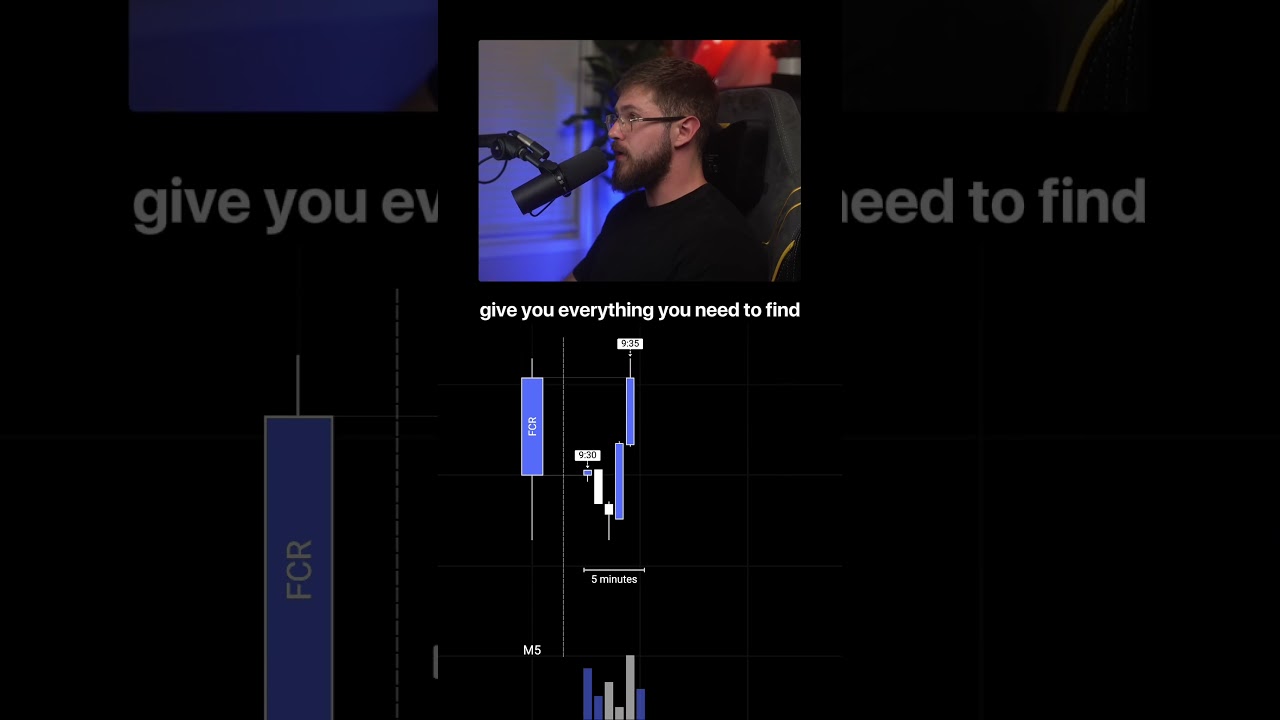
- Use a 5-minute chart to observe the first candle (9:30-9:35 a.m.).
- Mark the high and low of this first candle as the key trading levels for the day.
- These levels provide all necessary information for consistent winning trades.
This rule establishes a clear, objective starting point for the trading day, providing defined boundaries and potential trade signals without subjective interpretation.
The first candle forms between 9:30 a.m. and 9:35 a.m. EST on a 5-minute chart.
- Switch to a 1-minute chart to find trade entries.
- Wait for price to break through the established high or low level.
- Look for a 'gap formation' between candle wicks, not just a wick or candle close, indicating strong market momentum.
- This gap signifies who is in control (buyers or sellers).
This step filters trades by requiring strong directional momentum, helping to avoid weak or false breakouts and identify trades with higher probability of success.
Price breaks a level and leaves a visible gap between the candle body/wick of the breakout candle and the previous candle's range.
- After the gap forms, wait for the market to retest the 'fair value gap' (the area of the gap).
- Confirm the entry with an engulfing candle pattern at the retested level.
- Enter the trade immediately after the engulfing candle closes.
- Target a fixed 3:1 risk-to-reward ratio for all trades.
The retest and engulfing candle confirmation provide a second layer of validation, increasing confidence in the trade setup and ensuring a disciplined approach to profit targets.
An engulfing candle forms on the 1-minute chart after price pulls back to the gap created by the initial breakout.
Key takeaways
- Trading success is often found in simplicity, not complexity.
- The first candle of the trading day can provide crucial directional and level information.
- A confirmed gap formation indicates strong market conviction and control.
- Confirmation through retest and engulfing patterns is vital for high-probability entries.
- A fixed risk-to-reward ratio, like 3:1, ensures disciplined trade management.
- Following a defined, simple strategy allows the market's momentum to drive profits.
Key terms
First Candle RuleTrading Strategy5-minute chart1-minute chartKey LevelsGap FormationFair Value GapEngulfing CandleRisk-to-Reward Ratio
Test your understanding
- What is the core principle of the 'first candle rule' strategy?
- How do you identify key trading levels using the first candle?
- What specific price action on the 1-minute chart confirms strong market momentum after a level break?
- Why is waiting for a retest and an engulfing candle important for trade entry?
- What is the recommended risk-to-reward ratio for trades taken with this strategy?