4:50
The Differential Pressure Flow Measuring Principle (Orifice-Nozzle-Venturi)
Endress+Hauser
Overview
This video explains the principle of differential pressure flow measurement, a method used to measure the flow rate of liquids, gases, and steam in pipes. It details how a restriction in the pipe causes a fluid's velocity to increase and its static pressure to decrease, creating a measurable pressure difference. The video introduces key historical figures like Daniel Bernoulli and Giovanni Battista Venturi, and discusses various types of restrictions such as orifice plates, nozzles, and Venturi tubes, highlighting their respective advantages and applications in industrial settings.
How was this?
Save this permanently with flashcards, quizzes, and AI chat
Chapters
- Piping systems transport diverse substances like chemicals, oil, gas, and steam.
- Different fluids require different measurement principles.
- Differential pressure is a key principle for flow measurement.
Understanding the variety of fluids and the need for specific measurement techniques sets the stage for why differential pressure is a crucial and versatile method in industrial applications.
- Daniel Bernoulli discovered the relationship between fluid pressure and speed.
- Giovanni Battista Venturi developed the first flowmeter for closed pipes, the Venturi tube.
- These foundational principles explain the physics behind differential pressure flow measurement.
Knowing the historical and scientific basis of the differential pressure method helps in understanding the underlying physics that makes the measurement possible.
Giovanni Battista Venturi built the first flowmeter for closed pipes, known as the 'Venturi tube'.
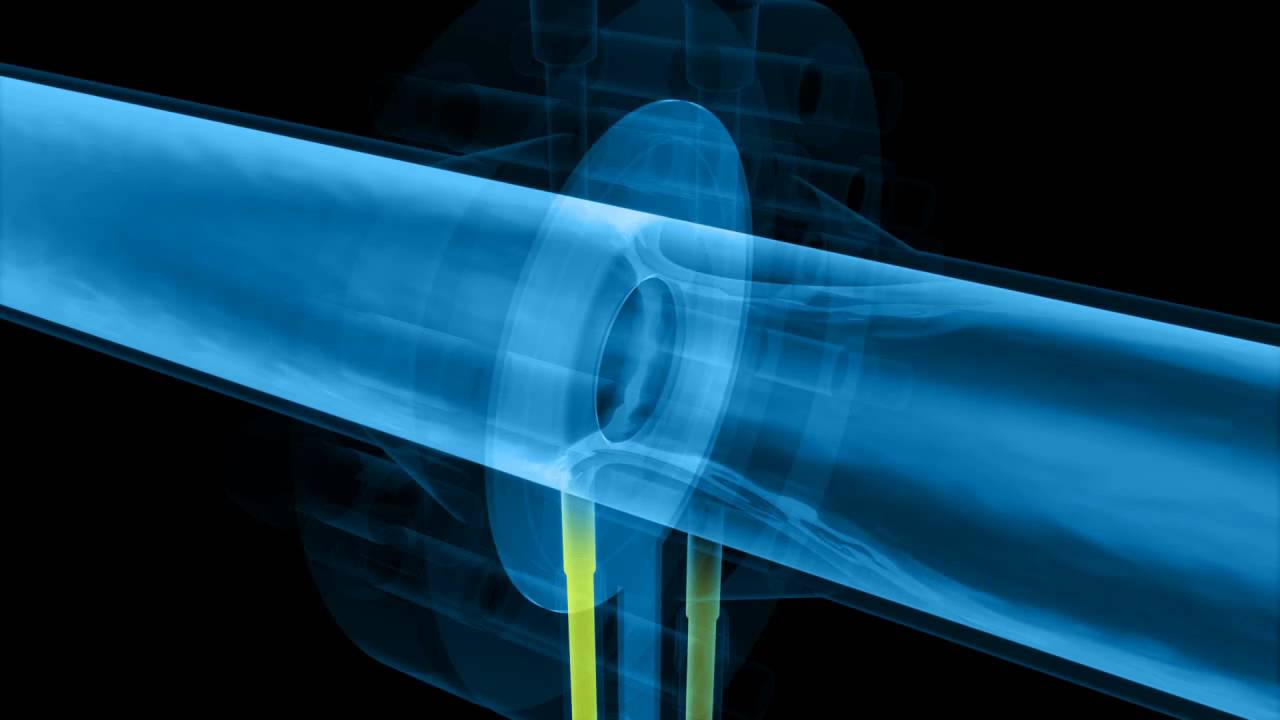
- A restriction (like an orifice plate) is placed in the pipe.
- This restriction causes fluid velocity to increase and static pressure to decrease.
- A differential pressure sensor measures the pressure difference before and after the restriction.
- This pressure difference is directly proportional to the flow rate.
This explains the core mechanism of differential pressure flowmeters, illustrating how a simple physical principle can be used to quantify fluid flow.
An orifice plate with two holes before and after it, connected to a differential pressure sensor, demonstrates how pressure differences are detected.
- Orifice plates create abrupt restrictions, leading to turbulence and pressure loss, but are widely used.
- Nozzles have rounded inlets to reduce turbulence and pressure loss, suitable for high velocities or abrasive fluids.
- Venturi nozzles and Venturi tubes offer even greater turbulence reduction with longer, conical constrictions.
- Different restriction designs can be optimized for specific process conditions to manage pressure loss and differential pressure.
Understanding the different types of restrictions highlights how the basic principle can be adapted for various industrial needs, optimizing performance and minimizing drawbacks.
Nozzles with rounded, funnel-like inlets clearly reduce turbulence compared to the abrupt restriction of an orifice plate.
- Differential pressure flow measurement has been a reliable industrial method for about 100 years.
- It can measure liquids, gases, and steam under extreme pressures and temperatures.
- Flowmeters are often customized to specific customer requirements and pre-mounted for ease of installation.
This emphasizes the practical, long-standing utility and adaptability of differential pressure flowmeters in demanding industrial environments.
Every differential pressure flowmeter is configured to customer specifications and premounted for specific applications.
Key takeaways
- Fluid flow rate can be determined by measuring the pressure difference created by a restriction in a pipe.
- The Bernoulli principle explains why fluid pressure decreases as its velocity increases.
- Orifice plates, nozzles, and Venturi tubes are common restrictions, each with trade-offs in pressure loss and turbulence.
- Nozzles and Venturi designs are preferred when minimizing pressure loss or handling abrasive fluids is critical.
- Differential pressure flow measurement is a robust and versatile technology suitable for a wide range of fluids and conditions.
- Customization of flowmeter components allows for optimization based on specific process requirements.
Key terms
Differential PressureFlow MeasurementOrifice PlateNozzleVenturi TubeBernoulli's PrincipleStatic PressureFluid VelocityTurbulencePressure Loss
Test your understanding
- How does introducing a restriction in a pipe affect fluid velocity and static pressure?
- What is the fundamental relationship between differential pressure and flow rate in this measurement principle?
- Why might an engineer choose a nozzle or Venturi tube over an orifice plate for a specific application?
- What are the key advantages of using differential pressure for flow measurement in industrial settings?
- Explain the scientific principles that enable differential pressure flowmeters to work.