1:44
Atom Explained in Simple Terms
MooMooMath and Science
Overview
This video explains the fundamental concept of an atom, the basic building block of matter. It defines matter as anything with mass and space, and introduces atoms as the components of elements. The video details the subatomic particles that make up an atom: protons and neutrons in the nucleus, and electrons orbiting the nucleus. It highlights that the number of protons, the atomic number, uniquely identifies an element. The mass of an atom is primarily determined by its protons and neutrons.
How was this?
Save this permanently with flashcards, quizzes, and AI chat
Chapters
- Matter is defined as anything that has mass and occupies space.
- Atoms are the fundamental particles that constitute most of the matter in the universe.
- An element is a substance composed of only one type of atom.
Understanding matter and atoms is crucial because they are the basic constituents of everything we observe, forming the foundation of chemistry and physics.
Examples of matter include stars, planets, a dog, and a rubber ducky.
- Atoms are composed of smaller subatomic particles.
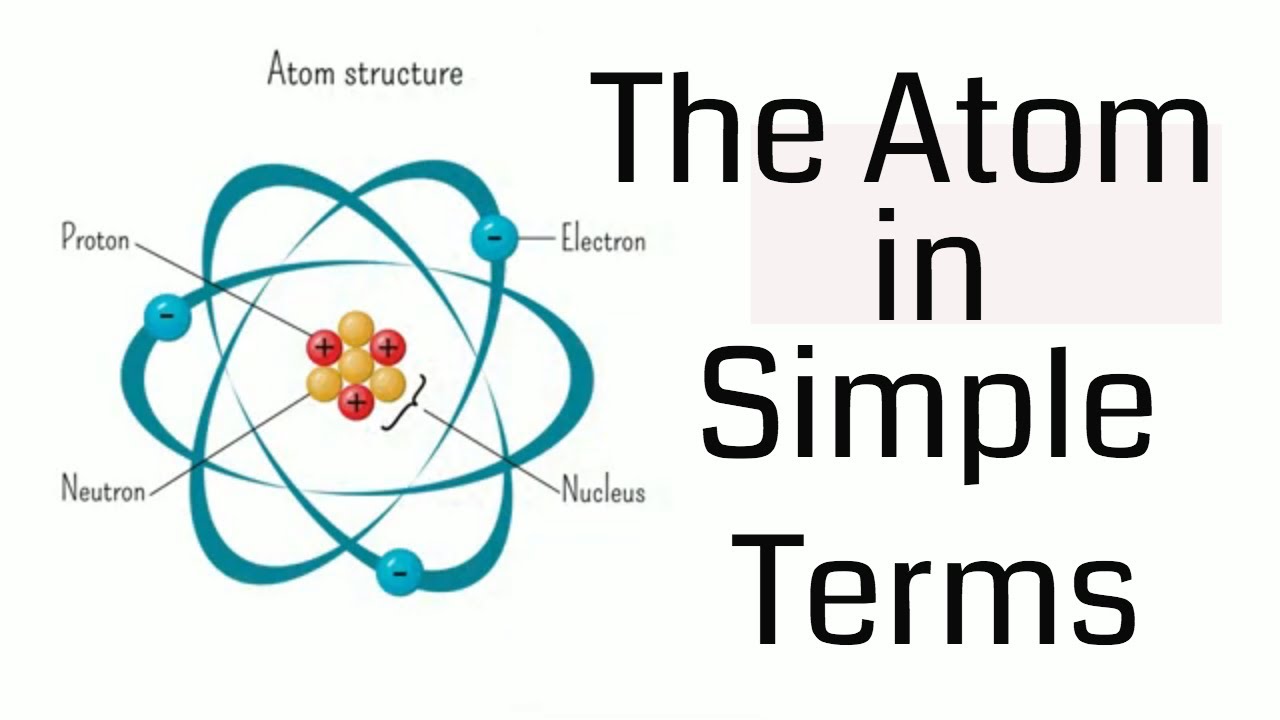
- The nucleus, located at the center of the atom, contains protons and neutrons.
- Protons are positively charged particles within the nucleus.
- Neutrons are uncharged particles found in the nucleus.
- Electrons are negatively charged particles that orbit the nucleus in a cloud.
Knowing the structure of an atom helps us understand how different elements behave and interact, which is essential for fields like material science and medicine.
The nucleus is like the sun, and the electrons orbiting it are like planets.
- The number of protons in an atom's nucleus is called the atomic number.
- Each element has a unique atomic number, serving as its defining characteristic.
- The mass of an atom is primarily determined by the combined mass of its protons and neutrons.
- Electrons have a significantly smaller mass compared to protons and neutrons.
The atomic number dictates an element's identity and chemical properties, while the mass number helps in understanding isotopes and nuclear reactions.
If an atom has 6 protons, its atomic number is 6, identifying it as Carbon.
Key takeaways
- Matter is anything with mass and volume, and atoms are its fundamental building blocks.
- Elements are pure substances made of only one type of atom, cataloged in the periodic table.
- Atoms consist of a central nucleus (protons and neutrons) and orbiting electrons.
- Protons carry a positive charge, neutrons are neutral, and electrons are negatively charged.
- The atomic number (number of protons) uniquely identifies an element.
- An atom's mass is mainly derived from the protons and neutrons in its nucleus.
Key terms
AtomMatterElementSubatomic particlesNucleusProtonNeutronElectronAtomic number
Test your understanding
- What are the two defining characteristics of matter?
- What are the three main subatomic particles and where are they located within an atom?
- How does the number of protons determine the identity of an element?
- What subatomic particles contribute most significantly to an atom's mass?
- Why is the atomic number a crucial property for identifying elements?