12:02
How this works for you
Huitzi Solutions LLC
Overview
This video explains the structure and mechanics of a unique internship program designed for rapid skill acquisition and practical application. The program alternates between learning and teaching weeks, with interns mentoring each other based on recently acquired knowledge. It emphasizes hands-on assessment through code contributions to production systems, peer mentorship, and the responsible use of AI tools. The program has strict participation rules but also robust support systems for handling failures and unexpected events, all documented to provide specific feedback for professional recommendations.
How was this?
Save this permanently with flashcards, quizzes, and AI chat
Chapters
- The internship is structured into alternating 'learning' and 'teaching' weeks, with each week representing a unit of work.
- Interns learn content in one week and then teach that same content to a new group of interns the following week.
- This cycle ensures that all material being taught is recent and actively mastered by the mentor.
- The program continues this pattern until interns have completed three learning weeks and three teaching weeks.
This alternating structure ensures that knowledge is fresh and practical, as mentors are teaching material they have just recently mastered, leading to a more effective and up-to-date learning experience for all participants.
Your first week is a learning week, your second is a teaching week, your third is learning again, and so on, for a total of three learning and three teaching weeks.
- Mentors are not senior staff or AI, but rather interns who started one week prior.
- Mentors teach content they mastered the previous week, and their mentees are interns who started one week after them.
- Teaching skills are developed organically, with guidance passed down from previous mentors.
- Mentor performance is directly evaluated by the success of their mentees in passing their learning weeks.
This peer-to-peer model fosters a collaborative learning environment and ensures that feedback and teaching methods are relevant and current, directly linking a mentor's success to their mentees' achievements.
Your mentor knows the material because they just mastered it themselves, and when you teach, you're teaching material you mastered last week.
- A learning week involves studying unit content, mandatory mentor meetings, and mandatory peer meetings.
- The primary assessment is not a test, but a merged pull request on actual production code.
- This assessment is reviewed live with a mentor and approved by a senior engineer from the host company.
- Passing the assessment signifies successful completion of the learning week.
The hands-on, real-world assessment through code contributions to production systems provides a rigorous and practical evaluation of skills, preparing interns for actual industry challenges.
The assessment isn't a multiple-choice test or written exam. It's a merged pull request on real production code. Code that becomes part of a US technology company's code base.
- During teaching weeks, interns mentor those who started after them, reinforcing their own learning.
- Guidance on how to teach is passed down through the mentorship chain.
- Success in a teaching week is determined by the mentees' ability to pass their subsequent learning weeks.
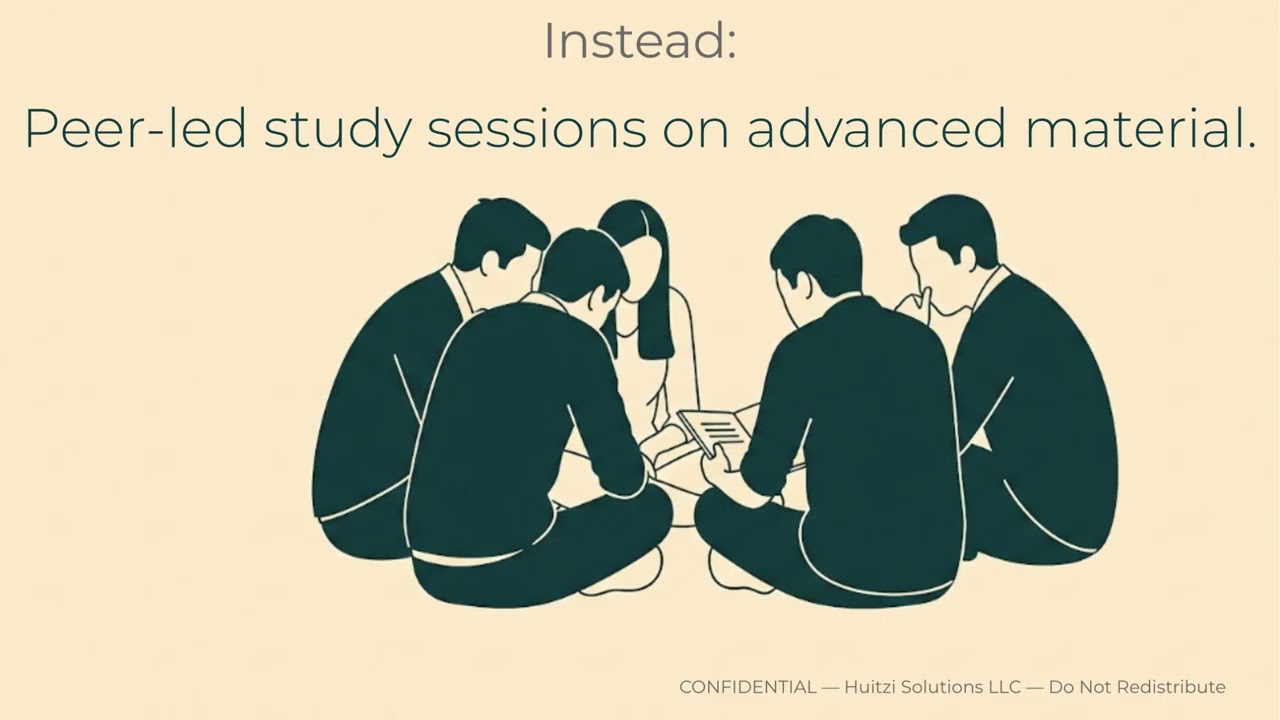
- For the final intake, teaching weeks transform into peer-led study sessions focusing on advanced material.
The success-based evaluation of teaching weeks incentivizes mentors to ensure deep understanding and effective knowledge transfer, fostering a culture of shared responsibility and continuous improvement.
Your performance as a mentor isn't measured by a test on the material. It isn't measured by a self-reflection. It's measured by your mentees themselves. If enough of your mentees pass their own learning week, you pass your teaching week.
- Interns are expected and permitted to use approved AI coding assistants like Gemini, Claude, and GitHub Copilot.
- Usage requires configuring privacy settings to prevent AI models from training on intern code.
- The critical condition is the ability to explain every line of submitted code, ensuring AI is a tool, not a crutch.
- Failure to explain code can lead to negative consequences.
This policy balances the benefits of AI assistance with the fundamental need for interns to develop genuine understanding and problem-solving skills, preparing them for environments where AI is a common tool but not a replacement for expertise.
You must be able to explain every line of code you submit. If your mentor asks you what a function does or why you wrote it that way, you need to be able to answer.
- Mandatory attendance at all scheduled meetings (mentor, peer) is required; repeated unexcused absences lead to dropout.
- Strict punctuality rules are enforced, with limited tardiness allowed before automatic dropout.
- A 12-hour response time is required for questions from mentors or mentees, with an escalation process for unresolved queries.
- The program provides automatic reassignment if a mentor drops out and offers alternative activities if mentees drop out.
- Failing a learning week allows for a retake with support; failing a teaching week requires re-mentoring the same content.
The strict rules ensure program synchronization and respect for others' time, while the built-in support systems and second chances mitigate the impact of failures, fostering resilience and a focus on learning rather than punishment.
If your mentor drops out part way through the your learning week, you're automatically reassigned to a different mentor. You don't have to find one yourself.
- All program activities, including meetings, code reviews, and feedback, are meticulously documented.
- This documentation serves as the basis for objective evaluations and highly specific LinkedIn recommendations.
- The program requires a minimum of six weeks of full-time participation, potentially longer if weeks need to be repeated.
- Voluntary contributions to course notes are encouraged and recognized.
Comprehensive documentation ensures fair evaluation and provides concrete evidence for personalized professional recommendations, while the defined program duration sets clear expectations for commitment and completion.
Your mentor meetings are transcribed. Your Discord conversations are saved. Peer feedback forms are recorded. Your PR history, code reviews, assessment results, all of it.
Key takeaways
- The internship's core innovation is the alternating learning-teaching cycle, where interns immediately apply and solidify knowledge by teaching it to peers.
- Mentorship is a peer-driven process, emphasizing shared learning and mutual success rather than hierarchical instruction.
- Practical, real-world assessment via production code contributions is central to validating skills and readiness.
- AI tools are permitted but must be used as aids to understanding, not as replacements for fundamental knowledge and the ability to explain one's work.
- Strict adherence to program rules is necessary due to the synchronized nature of the internship, impacting multiple participants.
- The program is designed to support learners through failures, offering retakes and re-mentoring opportunities without long-term penalty.
- Detailed documentation of all activities ensures objective evaluation and enables highly specific, credible professional recommendations.
Key terms
Learning WeekTeaching WeekUnit of WorkPeer MentorMenteeMerged Pull RequestProduction CodeAI Coding AssistantsEscalation ChainProtégé Effect
Test your understanding
- How does the alternating learning and teaching structure ensure that the material being taught is current and relevant?
- What is the primary difference between the mentorship model in this program and traditional internships?
- Describe the nature of the assessment used to evaluate an intern's performance during a learning week.
- How is an intern's success as a mentor measured within this program?
- What are the two main conditions for using AI coding assistants, and why are they important?