25:38
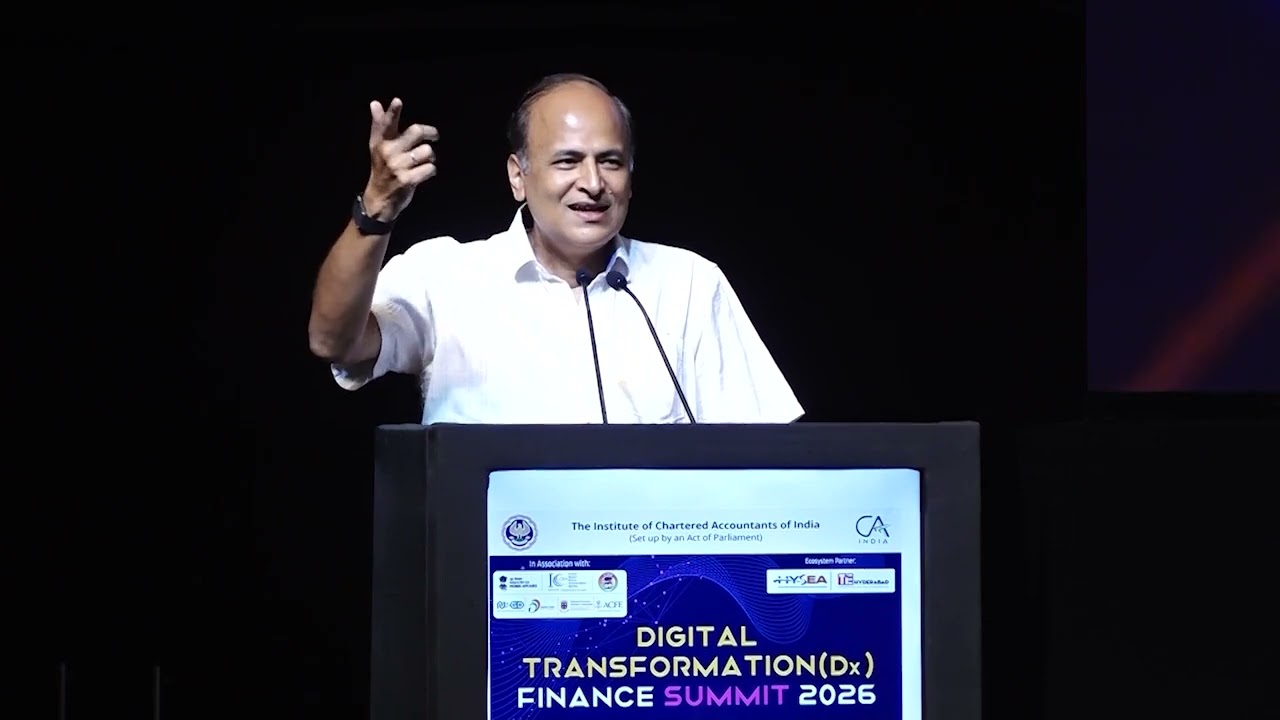
Shri Rajgopal Sharma,Principal Director of Income Tax Investigation(AP&Telangana)DxFS2026, DAAB-ICAI
ICAI CA Tube
Overview
This video explains how the Income Tax Department is leveraging digitized data and advanced technology, including AI and data analytics, to enhance taxpayer services, promote voluntary compliance, and improve tax administration and enforcement. It highlights the shift from manual processes to data-driven insights, enabling pre-filled returns, faster refunds, and more targeted investigations. The speaker emphasizes the importance of accurate taxpayer information and active citizen participation in this data-based governance system, while also discussing new challenges like virtual digital assets and electronic sales suppression.
How was this?
Save this permanently with flashcards, quizzes, and AI chat
Chapters
- Data has always existed, but digitization is the key driver of transformation in tax administration.
- Digitized data enhances taxpayer services by enabling pre-filled returns and faster refunds.
- The primary goal is to ensure voluntary compliance and improve taxpayer service, with enforcement as a secondary measure.
- Tools like the Annual Information Statement (AIS) help taxpayers by pre-filling information and allowing them to identify and disown fraudulent transactions.
Understanding this evolution helps taxpayers appreciate the benefits of digitization and how it aims to simplify compliance and improve service delivery.
Pre-filling savings bank interest in tax returns, which previously required manual calculation from bank statements.
- Specified Financial Transactions (SFTs) are normal transactions reported by entities like banks and registrars, not suspicious ones.
- SFTs include a wide range of activities such as interest from savings accounts, property transactions, and foreign currency purchases.
- Accurate reporting of PAN and maintaining correct contact information (email, mobile) in e-filing accounts is crucial for receiving alerts and ensuring data integrity.
- API-based filing is being developed to minimize data errors by directly transferring data between systems.
Ensuring your contact information is up-to-date and understanding SFTs helps prevent errors and allows you to respond promptly to any discrepancies or potential misuse of your information.
Receiving an SMS alert about a financial transaction linked to your PAN, prompting you to verify its authenticity.
- Digitized data allows for sophisticated rule-based evaluation to identify mismatches between reported income and actual financial activities.
- Examples of mismatches include showing TDS on contract receipts without reporting turnover or not reflecting GST purchases in returns.
- While complex, these rules aim to simplify compliance by making databases 'talk' to each other across different organizations.
- Digital data has evidentiary value, supported by a legal framework and digital certificates, eliminating the need for cumbersome physical evidence.
This demonstrates how the tax department uses data to ensure fairness and identify non-compliance, making the tax system more robust.
Identifying a mismatch where a taxpayer shows TDS on contract receipts but reports no turnover in their return.
- Virtual Digital Assets (VDAs) are subject to a clear tax regime, distinct from currency.
- Tax must be paid on gains from VDAs, even if there are net losses across multiple transactions, due to a flat tax rate and no loss set-off.
- The transaction trail for VDAs is permanent and traceable, making it difficult to evade taxes.
- There is a significant discrepancy between VDA ownership data and reported income, requiring education for taxpayers and professionals.
This highlights a critical and evolving area of taxation where non-compliance can lead to significant penalties due to the transparent nature of VDA transactions.
A taxpayer with a 100 rupee gain on one VDA transaction and a 120 rupee loss on another must still pay tax on the 100 rupee gain.
- Satellite imagery from ISRO is now used to verify claims of agricultural income, replacing traditional documentary evidence.
- Future efforts involve integrating data from agriculture ministries, NRSA, and market prices to estimate average agricultural income in specific areas.
- AI tools are employed to verify the authenticity of bills, such as those for cost of improvement claimed against capital gains.
- AI can flag suspicious bills by analyzing details like font types and addresses, reducing the need for manual inspection of all documents.
This showcases how technology is making tax administration more efficient, objective, and less burdensome for genuine taxpayers.
An AI tool identifying a bill purportedly from 2005 printed in Calibri font, which was released in 2007, indicating a fraudulent document.
- Income Tax departments have established advanced data analytics labs with high-end infrastructure for processing large datasets.
- Tools like AI and social media scraping are used to gather digital intelligence and verify expenditures without physical searches.
- Websites like 'AI for That' help identify relevant AI tools for various applications.
- Big data analytics enables the department to identify non-filers and under-reporters of income, such as restaurants operating through e-commerce platforms.
These advanced capabilities allow the department to achieve more with limited human resources, improving both service and enforcement.
Analyzing billing data from 1.7 lakh restaurants to identify those suppressing their turnover (Electronic Sales Suppression - ESS).
- Electronic Sales Suppression (ESS) involves using separate billing and accounting software to under-report sales, often by deleting or modifying bills.
- This practice is not unique to India and is addressed in other countries through mandated software standards and audit trails.
- The trend towards franchise models makes it harder for owners to oversee every transaction, increasing reliance on robust software.
- Compliance by Design, as seen in French law mandating certified software with audit trails, is a more effective approach than deterrence-based compliance.
Understanding ESS and the concept of 'compliance by design' is crucial for businesses to avoid inadvertently engaging in fraudulent practices and for auditors to ensure diligence.
A restaurant owner using a billing software that allows for the deletion of bills, which are then not exported to the accounting software, thus suppressing reported turnover.
Key takeaways
- Digitization is transforming tax administration, enhancing services and enforcement through data analysis.
- Voluntary compliance is the primary goal, supported by tools that simplify tax filing and provide transparency.
- Accurate personal information (PAN, email, phone) is vital for taxpayers to receive critical alerts and ensure data integrity.
- Virtual Digital Assets (VDAs) have a unique tax structure requiring careful attention to avoid non-compliance.
- Technology, including AI and satellite imagery, is increasingly used to verify claims and detect discrepancies objectively.
- Electronic Sales Suppression (ESS) is a growing challenge that requires robust digital audit trails and potentially mandated software standards.
- Compliance by Design, where systems inherently ensure correct behavior, is more effective than relying solely on deterrence.
- Active citizen involvement and accurate data reporting are essential for a functioning data-based governance system.
Key terms
Digitized DataAnnual Information Statement (AIS)Specified Financial Transactions (SFTs)Voluntary ComplianceAPI-based FilingVirtual Digital Assets (VDAs)Electronic Sales Suppression (ESS)Compliance by DesignAudit TrailData Analytics Labs
Test your understanding
- How does the digitization of data fundamentally change the approach to taxpayer service and enforcement?
- What is the role of Specified Financial Transactions (SFTs) in the tax administration process, and why is accurate personal information crucial for taxpayers?
- Explain the tax implications of Virtual Digital Assets (VDAs), particularly regarding gains and losses.
- How is technology, such as AI and satellite imagery, being used to verify claims and enhance the efficiency of tax investigations?
- What is Electronic Sales Suppression (ESS), and how do 'compliance by design' principles aim to combat it more effectively than traditional deterrence methods?