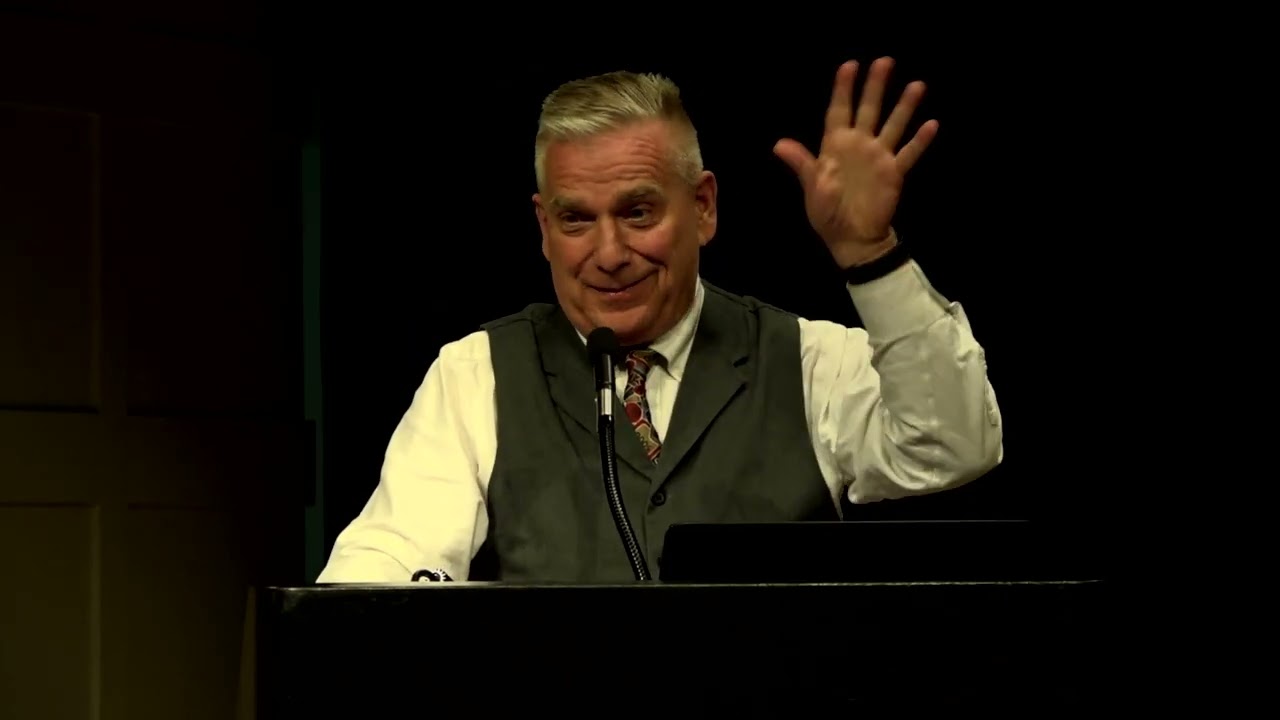
Propaganda Use by the Nazis: Gaining & Maintaining Power (WW2HRT_37-04)
World War II History Round Table
Overview
This video explores the pervasive use of propaganda by the Nazi regime to gain and maintain power, drawing parallels to modern media consumption. It details how propaganda was used to shape public opinion, demonize enemies, and create a cult of personality around Hitler. The lecture emphasizes that propaganda aims to evoke emotion rather than critical thought, using simple, repetitive messages. It examines the evolution of Nazi propaganda from its rise to power through wartime, highlighting its sophisticated use of media like film and radio. The discussion extends to the concept of Nazi propaganda as a form of 'political religion' and its lasting impact, urging viewers to be critically aware of manipulative messaging in contemporary society.
Save this permanently with flashcards, quizzes, and AI chat
Chapters
- Propaganda is the use of media to deliver a message designed to elicit a specific response from the audience.
- It bypasses rational thought by appealing directly to emotions, utilizing vivid imagery and simple slogans.
- Effective propaganda is characterized by simple, direct messages that are repeated incessantly, becoming subconsciously absorbed.
- The goal of propaganda is not to educate but to make the audience feel a certain way, often by presenting 'our side' as good and the enemy as evil.
- During their rise to power, Nazi propaganda focused on building Hitler's political strength.
- Initially, Hitler's image was softened from a militant figure to a more approachable, bourgeois politician to appeal to a wider audience.
- Posters and messaging presented Hitler as the 'Last Hope' for Germany, offering a seemingly reasonable choice.
- Upon taking power, propaganda shifted to promoting the rebuilding of Germany and the achievements of the 'Führer'.
- The 1936 Berlin Olympics were a major propaganda showcase for the Nazi regime's achievements.
- The Nazis pioneered the effective use of motion pictures for propaganda, exemplified by Leni Riefenstahl's 'Olympia'.
- They also experimented with television in the 1930s, albeit on a limited scale.
- Propaganda themes shifted during wartime to bolster home front morale and demonize the enemy.
- During the war, propaganda aimed to maintain hope on the home front and vilify the enemy.
- Early war propaganda celebrated the German war machine's invincibility.
- As the war turned, themes became darker, emphasizing national sacrifice and the desperate defense by soldiers.
- A core element was the demonization of opponents, culminating in the pervasive Nazi fantasy of an international Jewish conspiracy, leading to overtly anti-Semitic messaging.
- Modern media, particularly memes, share characteristics with historical propaganda posters: simple slogans with images.
- The internet and social media provide unprecedented mechanisms for propaganda distribution.
- Individuals often exist in 'information silos' or 'echo chambers,' reinforcing existing beliefs and limiting exposure to diverse viewpoints.
- This creates a susceptibility to simple, emotion-packed messaging, mirroring the effectiveness of Nazi propaganda.
- Nazi propaganda functioned like a political religion, presenting Hitler as a near-divine figure.
- The 'theology' of Nazism emphasized the common good over the individual, the supremacy of the German race, and sacrifice.
- Practices of 'worship' included rallies, songs, and rituals designed to foster community and reinforce beliefs.
- The Nazis promoted a worldview intended to permeate all aspects of life, from politics to interior decoration.
- A fundamental principle of Nazi theology was the concept of race, particularly the superiority of the German race.
- This was contrasted with the 'bad race,' primarily the Jews, who were depicted as the devil incarnate.
- Nazi propaganda could not tolerate dissent, viewing it as heresy against their absolute truth.
- Principles of simplicity, repetition, and emotional appeal were central to their messaging, aiming to sell a worldview, not just products.
- The Nazis created their own calendar of holidays and ceremonies, mirroring religious practices.
- Events like the Nuremberg rallies and the commemoration of the Beer Hall Putsch served as acts of worship and reinforcement.
- Rituals for birth, marriage, and death were integrated into the Nazi framework, aiming for omnipresence.
- Propaganda presented a vision of a Nazi 'heaven' on Earth achieved through sacrifice, contrasted with a 'hell' of destruction if Germany lost, often personified by the Jews.
- Nazi propaganda was highly effective, contributing to German morale holding until the war's final weeks.
- Modern propaganda is arguably more effective due to decentralized control and individuals acting as their own editors, reinforcing biases.
- The antidote to propaganda lies in critical thinking, exposing oneself to diverse viewpoints, and seeking information from varied sources, including foreign media.
- Supporting traditional journalism with editors and a range of opinions is crucial for combating the spread of misinformation.
Key takeaways
- Propaganda's primary goal is to evoke emotion and bypass critical thinking through simple, repetitive, and emotionally charged messages.
- Nazi propaganda evolved from building a leader's image during their rise to power to a totalizing 'political religion' that permeated all aspects of life.
- The Nazis masterfully used emerging technologies like film and radio, alongside traditional media, to disseminate their message.
- Demonization of enemies, particularly the pervasive anti-Semitism, was a central and escalating theme in Nazi propaganda, especially during wartime.
- Modern media, through tools like memes and social media algorithms, creates 'information silos' that echo historical propaganda's effectiveness in reinforcing biases.
- Propaganda can be understood as a form of political religion, complete with deities, theology, rituals, and visions of heaven and hell.
- The most effective defense against propaganda is critical thinking, actively seeking diverse perspectives, and supporting media that offers a range of viewpoints.
- Understanding historical propaganda, like that of the Nazis, serves as a crucial mirror to contemporary media consumption and potential manipulation.
Key terms
Test your understanding
- What are the core characteristics of propaganda, and how do they differ from educational content?
- How did Nazi propaganda adapt its messaging and imagery during the party's rise to power versus its time in control?
- In what ways did the Nazis employ propaganda techniques that mirrored religious practices, and why was this effective?
- What parallels exist between historical Nazi propaganda and modern media consumption, particularly concerning social media and online content?
- What strategies can individuals employ to critically evaluate information and resist the manipulative effects of propaganda in contemporary society?