18:15
The Italian Renaissance (AP Euro Review)
Tom Richey
Overview
This video explores the Italian Renaissance, a period of "rebirth" following the Middle Ages, focusing on the revival of classical Greek and Roman culture. It highlights the rise of humanism, emphasizing human potential and secular concerns alongside Christian faith. The video details key figures like Petrarch, Pico della Mirandola, and Machiavelli, and discusses the influence of Italian city-states, patronage, commerce, and inventions like the printing press. The core values of humanism, individualism, secularism, commerce, and invention are examined through their impact on art, literature, and political thought, setting the stage for later European developments.
How was this?
Save this permanently with flashcards, quizzes, and AI chat
Chapters
- The Renaissance, meaning "rebirth," signifies a revival of classical Greek and Roman culture after the Middle Ages, which humanists viewed as a "Dark Age."
- The High Renaissance is generally dated around 1500, with the broader period spanning from roughly 1400 to 1600.
- Italy, particularly city-states like Florence, was the epicenter of the Italian Renaissance, fostering an environment free from monarchies and influenced by powerful families and the Papacy.
- Key values driving the Renaissance included humanism, individualism, secularism, commerce, and invention.
Understanding the Renaissance as a "rebirth" helps contextualize the shift in European thought from a solely religious focus to one that also valued human achievement and classical learning.
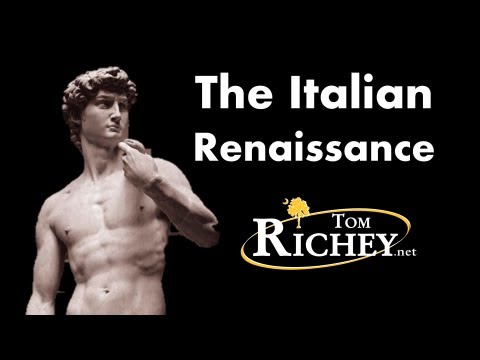
Michelangelo's David, a perfectly formed human figure, exemplifies the Renaissance focus on human potential and a more secular, though still Christian, worldview.
- Humanism is the intellectual movement focused on studying humanity through subjects like history, art, literature, grammar, and classical texts.
- Renaissance humanists studied Greek, Roman, and biblical literature, often in their original languages (Latin, Greek, and Hebrew), to understand them directly.
- Unlike in the Middle Ages, where classical texts were often used solely to support Christian doctrine (e.g., Aquinas reconciling Aristotle with Christianity), humanists studied them for their own sake and for their inherent value.
- Petrarch, considered the "father of humanism," was obsessed with ancient Rome and sought out lost classical manuscripts, lamenting the perceived neglect of this heritage during the Middle Ages.
Humanism shifted the focus of education and intellectual inquiry towards human experience and classical wisdom, laying the groundwork for modern liberal arts education.
Petrarch's obsessive search for and discovery of Cicero's lost manuscripts illustrates the humanist dedication to recovering and appreciating classical literature.
- The fall of Constantinople in 1453 led many Greek scholars to flee to Italy, bringing with them valuable knowledge of Greek language and texts.
- This influx of scholars expanded Renaissance studies beyond Latin into Greek, making works by philosophers like Plato more accessible.
- The translation of Greek texts into Latin allowed a wider audience to engage with classical philosophy, moving beyond the medieval focus on Aristotle.
The migration of Greek scholars to Italy significantly broadened the scope of Renaissance learning, integrating Platonic philosophy and a deeper understanding of classical Greek culture.
The translation of Plato's works into Latin, facilitated by scholars fleeing Constantinople, allowed more Europeans to study his philosophy.
- Pico della Mirandola's "Oration on the Dignity of Man" is considered a manifesto of the Renaissance, celebrating human potential and free will.
- The oration places humanity at the center of the universe, with the unique ability to choose their own destiny—to ascend towards the divine or descend towards the animalistic.
- Pico sought to synthesize Christian and classical traditions, viewing them as equal components of the human experience, a concept known as syncretism.
- This approach differed from earlier attempts (like Aquinas') to subordinate classical thought to Christian doctrine.
Pico's work articulated a powerful vision of human agency and potential, deeply influencing the humanist worldview and emphasizing the individual's capacity for self-determination.
Pico's depiction of man as a 'miracle' positioned between angels and animals, possessing free will to choose his path, encapsulates the humanist celebration of human potential.
- Secularism in the Renaissance meant pursuing knowledge and art for their own sake, not necessarily being anti-Christian but rather human-centered.
- Petrarch's epic poem "Africa" celebrated ancient Rome, and his "Canzoniere," a collection of sonnets to Laura, was written in the vernacular, making love poetry accessible to a wider audience, including women.
- The ideal Renaissance woman, as exemplified by Laura in Petrarch's work, was both virtuous and beautiful.
- Machiavelli's "The Prince" offered pragmatic advice to rulers, suggesting that the ends justify the means and that it is better to be feared than loved to maintain power and potentially unite Italy.
The embrace of secularism and vernacular language broadened the reach of Renaissance ideas and art, while Machiavelli's political philosophy introduced a pragmatic, often ruthless, approach to statecraft.
Petrarch writing love sonnets to Laura in the vernacular Italian, rather than Latin, allowed more people, especially women, to engage with his poetry.
- Commerce and the rise of banking families like the Medici fueled the Renaissance by providing wealth for artistic patronage.
- The Medici family, despite the Church's medieval ban on usury (lending money with interest), engaged in banking, accumulating wealth that supported artists like Michelangelo.
- The invention of the printing press by Gutenberg revolutionized the spread of knowledge, making books cheaper, more accessible, and widely read.
- The increased availability of texts, including the Gutenberg Bible, contributed to a rise in literacy and laid the groundwork for future intellectual movements like the Reformation.
Economic developments and technological innovations like the printing press democratized knowledge and art, accelerating the dissemination of Renaissance ideas and fostering a more literate society.
Gutenberg's printing press allowed for the mass production of books like the Gutenberg Bible, making written knowledge far more accessible than the hand-copied manuscripts of the Middle Ages.
Key takeaways
- The Renaissance marked a significant shift from medieval thought by reviving interest in classical antiquity and emphasizing human potential.
- Humanism, as a core philosophy, promoted the study of humanity and classical texts, influencing education and intellectual pursuits.
- The fall of Constantinople played a crucial role in disseminating Greek scholarship and texts throughout Italy, enriching Renaissance learning.
- Key figures like Petrarch and Pico della Mirandola articulated humanist ideals, celebrating human agency, reason, and the synthesis of diverse intellectual traditions.
- Secularism allowed for the pursuit of knowledge and art for their own sake, broadening the scope of intellectual and creative expression.
- Economic factors, such as the rise of banking and patronage, directly funded the artistic and intellectual flourishing of the Renaissance.
- The invention of the printing press was a transformative technology that democratized knowledge and accelerated the spread of ideas across Europe.
Key terms
RenaissanceHumanismClassical AntiquityMiddle AgesHigh RenaissanceCity-statesPatronageIndividualismSecularismCommerceInventionVernacularSyncretismUsuryPrinting Press
Test your understanding
- What does the term "Renaissance" signify, and what historical period did it follow?
- How did humanism change the focus of intellectual and educational pursuits compared to the Middle Ages?
- What role did the fall of Constantinople play in the development of Renaissance scholarship?
- Explain the concept of "secularism" as it applied to Renaissance thought and art.
- How did inventions like the printing press impact the spread of knowledge and literacy during the Renaissance?