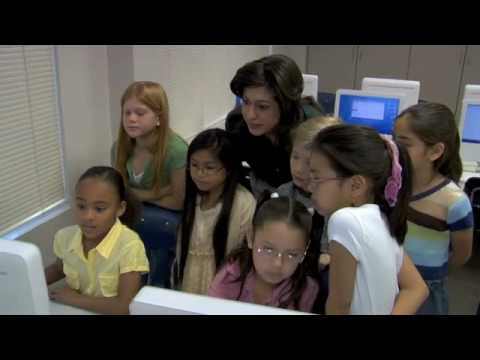
Introduction to Culturally Relevant Pedagogy
Learning for Justice
Overview
This video introduces the concept of Culturally Relevant Pedagogy (CRP), emphasizing that culture, encompassing worldviews, beliefs, language, and values, is central to teaching and learning. It explains that students are not 'blank slates' but bring their unique cultural experiences into the classroom. CRP involves teachers acting as 'cultural translators' to connect students' existing knowledge with new material. The video also highlights the importance of understanding the difference between visible and invisible culture, and cautions against conflating race or ethnicity with culture, which can lead to harmful generalizations and a one-size-fits-all approach to education.
Save this permanently with flashcards, quizzes, and AI chat
Chapters
- Culture is the foundation of culturally relevant pedagogy, encompassing worldviews, beliefs, language, and values.
- Culture acts as a filter through which individuals make sense of the world.
- Culture can be categorized as visible (tangible, like art and music) and invisible (intangible, like values and beliefs), with invisible aspects being more influential in learning.
- Culturally relevant pedagogy requires teachers to connect students' everyday cultural experiences to academic learning.
- Teachers act as 'cultural translators' and 'bridge builders' to link what students already know with new concepts.
- CRP acknowledges that students are not 'blank slates' but active learners with prior cultural knowledge that informs their understanding.
- A common educational dilemma arises when the school's communication style (its 'cultural filters') clashes with students' own cultural filters.
- This incompatibility hinders learning because students try to process information through a different cultural lens than the one used to deliver it.
- Culturally responsive teaching advocates for schools to adapt their instructional methods rather than solely expecting students to conform to the school's culture.
- It is critical to remember that students are individuals first, not just representatives of an ethnic group.
- Students' connection to their ethnic group varies based on factors like acculturation, social class, and personal experiences.
- Conflating race or ethnicity with culture can lead to dangerous overgeneralizations, such as assuming all students from a particular background learn in the same way.
Key takeaways
- Culture is not just visible elements like art, but also invisible values and beliefs that shape how students learn.
- Effective teachers act as cultural bridges, connecting students' home culture to school learning.
- Students are not empty vessels; they arrive with rich cultural knowledge that must be acknowledged and built upon.
- When school culture and student culture clash, the school should adapt, not just the student.
- Treating students as individuals with unique experiences is more important than making assumptions based on their ethnic or racial group.
- Attributing learning styles or needs to entire racial or ethnic groups is a harmful oversimplification that undermines culturally relevant pedagogy.
Key terms
Test your understanding
- What are the two main categories of culture discussed, and why is one considered more important for learning?
- How does culturally relevant pedagogy empower teachers to connect with their students?
- Why is it problematic for schools to expect students to solely adapt to the school's culture?
- What is the danger of conflating race or ethnicity with culture in an educational setting?
- How can a teacher act as a 'cultural translator' in their classroom?