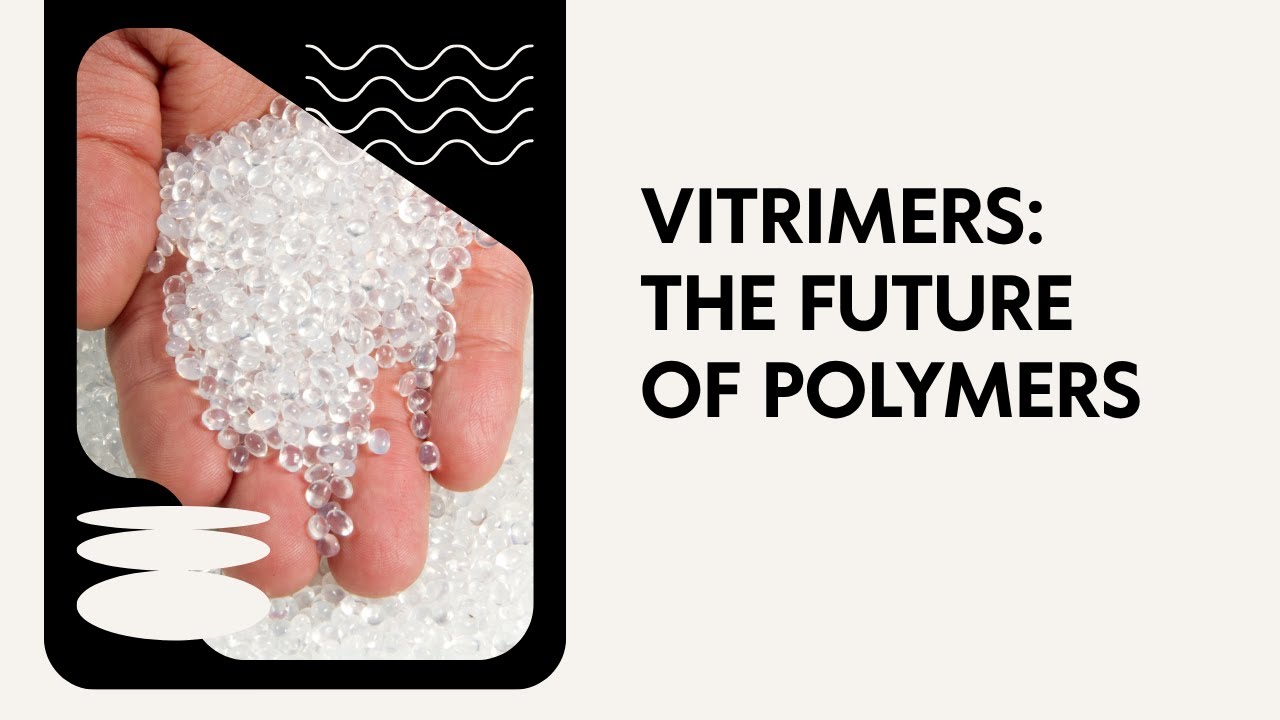
Vitrimers Explained| The Smart Polymers That Heal, Recycle & Reshape
Automotive & Materials Engineering Explained
Overview
This video introduces vitrimers, a novel class of smart polymers that combine the durability of thermosets with the reprocessibility of thermoplastics. Unlike traditional plastics, vitrimers feature dynamic covalent bonds that can break and reform under specific conditions, typically heat. This allows them to be reshaped, repaired, and recycled without degrading their structure. The video explores the unique properties of vitrimers, their diverse applications in industries like automotive, aerospace, electronics, and 3D printing, and the ongoing research to make them more sustainable and cost-effective. Vitrimers represent a significant advancement in materials science, offering a path towards more sustainable manufacturing and a circular economy.
Save this permanently with flashcards, quizzes, and AI chat
Chapters
- Traditional plastics, especially thermosets, are durable but cannot be reshaped or recycled once cured.
- This leads to significant waste and environmental challenges.
- There's a need for materials that offer the strength of thermosets with the reprocessibility of thermoplastics.
- Vitrimers are a new class of polymers that are covalently cross-linked like thermosets.
- Their key feature is the ability of their cross-links to reversibly rearrange under specific conditions, usually heat.
- This dynamic covalent chemistry allows bonds to break and reform without damaging the polymer's main structure.
- Vitrimers possess the thermal stability and high mechanical strength of thermosets.
- They offer the reprocessibility, self-healing, recyclability, and weldability of thermoplastics.
- Their viscosity decreases gradually with temperature, unlike the abrupt melting of thermoplastics, allowing for controlled flow.
- Automotive and aerospace industries use vitrimers for lightweight, repairable, and recyclable composite panels.
- Electronics benefit from stretchable and reworkable circuit substrates, extending device life.
- 3D printing utilizes vitrimer inks for dynamic prototyping and post-print repairs.
- Coatings and adhesives can be debonded and rebonded with heat, eliminating the need for solvents.
- Vitrimers can be synthesized from various monomers like epoxy, polyester, and polyurethane, often using catalysts.
- Research is focused on creating bio-based vitrimers from renewable resources like lignin.
- Future developments include multi-functional composites and closed-loop manufacturing systems for complete recyclability.
- Challenges remain in controlling reaction kinetics, reducing catalyst costs, and scaling up production.
Key takeaways
- Vitrimers bridge the gap between thermosets and thermoplastics by enabling dynamic bond rearrangement.
- The ability to self-heal, reshape, and recycle vitrimers significantly reduces material waste.
- Vitrimers maintain high mechanical strength and thermal stability even after multiple reprocessing cycles.
- Their gradual viscosity change with temperature allows for controlled processing and repair.
- Vitrimers offer sustainable solutions for industries seeking to improve product lifespan and recyclability.
- The development of bio-based vitrimers is a key step towards more environmentally friendly materials.
- Overcoming challenges in cost and scalability is essential for widespread industrial adoption of vitrimers.
Key terms
Test your understanding
- How do vitrimers differ from traditional thermoset plastics in terms of their chemical structure and properties?
- What is the role of dynamic covalent chemistry in enabling the unique functionalities of vitrimers?
- Explain why the gradual change in viscosity with temperature is an important characteristic of vitrimers.
- What are some of the key industrial applications where vitrimers offer significant advantages over existing materials?
- What are the main challenges that need to be addressed for the widespread adoption of vitrimer technology?