15:42
Na ceste k PRVEJ SVETOVEJ VOJNE
Dejepis Inak
Overview
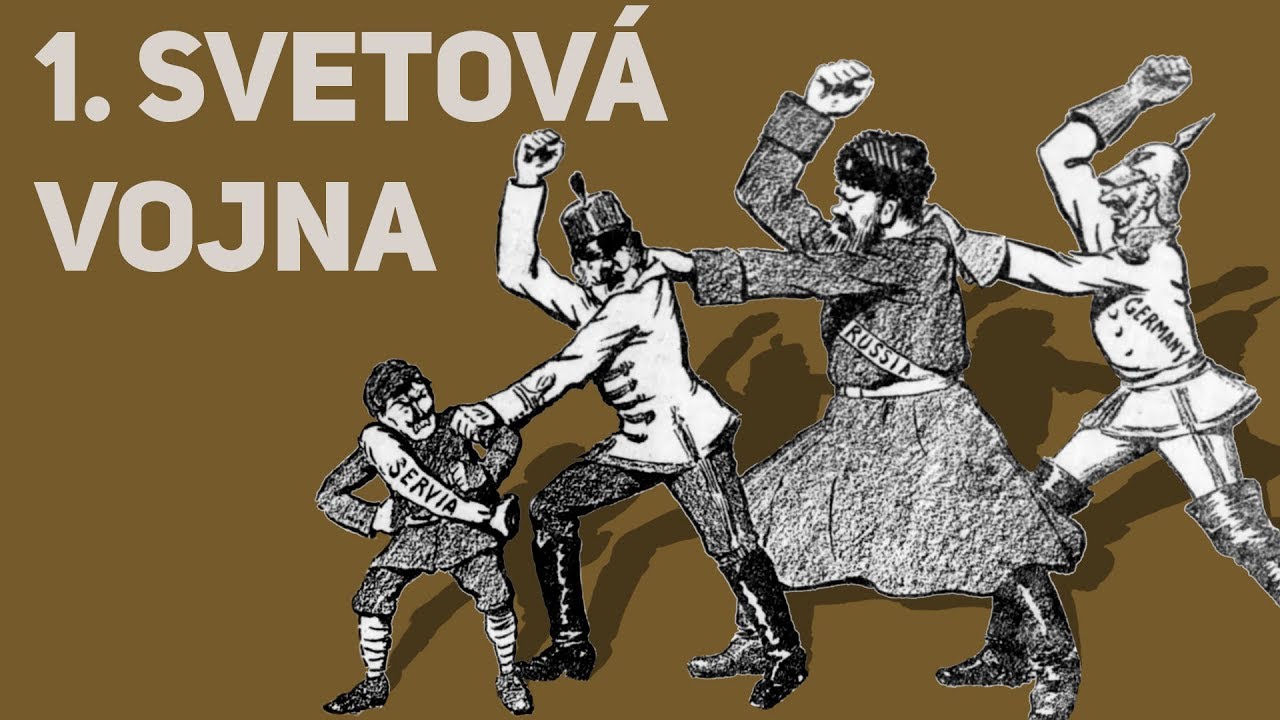
This video explains the complex web of political, economic, and social factors that led to the outbreak of World War I. It details the geopolitical landscape of Europe in the early 20th century, focusing on the major powers: Great Britain, Russia, France, Germany, Austria-Hungary, and Italy. The summary highlights their individual ambitions, rivalries, and alliances, emphasizing how a delicate balance of power, fueled by nationalism, militarism, and imperialism, ultimately collapsed after the assassination of Archduke Franz Ferdinand, igniting the 'Great War'. The video also touches upon the war's total nature and its profound, world-altering consequences.
How was this?
Save this permanently with flashcards, quizzes, and AI chat
Chapters
- The assassination of Archduke Franz Ferdinand in Sarajevo on June 28, 1914, acted as the immediate trigger for World War I.
- WWI, initially called the 'Great War', was the first global conflict, involving 34 out of 54 nations.
- The war resulted in 10 million deaths and over 30 million wounded.
- It was a 'total war' that militarized economies and deeply affected civilian life.
- The war's aftermath saw the collapse of empires, the birth of new nations (like Czechoslovakia), and the rise of ideologies like communism and fascism.
Understanding the assassination as a trigger, rather than the sole cause, is crucial for grasping the deep-seated tensions that led to the war.
The assassination of Archduke Franz Ferdinand in Sarajevo.
- Britain was the 'workshop of the world' in the 19th century, a dominant industrial, trade, and naval power.
- The 'Two Power Standard' ensured the Royal Navy was as strong as the next two largest navies combined.
- Its vast empire, stretching from Canada to Australia and India, shaped its foreign policy, prioritizing the route to India.
- Britain favored a European balance of power, intervening to support the weaker side or staying out unless a single dominant power emerged.
Britain's focus on its empire and maintaining European equilibrium influenced its decisions on alliances and interventions.
The 'Two Power Standard' for its navy.
- The Romanov dynasty ruled Russia, which was economically and militarily less advanced than Western Europe.
- Russian foreign policy focused on the Balkans, supporting Slavic national movements and seeking access to the Mediterranean via the Bosporus.
- The Berlin Congress (1878) curtailed Russian influence after the Russo-Turkish War, fostering resentment towards Austria-Hungary and Germany.
- Defeat by Japan in 1905 led to internal crises (peasant hardship, poor working conditions, suppression of freedoms) that weakened the Tsarist regime.
Russia's desire for Balkan influence and its internal instability made it a volatile player in European politics.
The Russo-Japanese War of 1905 and its impact on internal Russian unrest.
- France, despite colonial success, was weaker than perceived, largely due to its defeat in the 1870 Franco-Prussian War.
- The loss of Alsace-Lorraine and heavy reparations fueled strong anti-German sentiment and a desire for revanche.
- The Dreyfus Affair exposed deep-seated racial prejudices and societal divisions.
- France actively sought alliances to counter the growing power of Germany.
France's lingering humiliation from the Franco-Prussian War and its deep-seated anti-German sentiment were major drivers of its foreign policy.
The loss of Alsace-Lorraine after the Franco-Prussian War.
- The unification of Germany in 1871 created a powerful new European state, causing fear among other nations.
- Germany possessed a highly effective army and a rapidly growing economy, aspiring to colonial expansion.
- Under Kaiser Wilhelm II, Germany significantly expanded its military, particularly its navy, alarming Britain.
- Germany sought strong allies, viewing Austria-Hungary as a key partner.
Germany's rapid rise in industrial and military power, coupled with its imperial ambitions, directly challenged the existing European order.
Germany's rapid naval expansion under Kaiser Wilhelm II.
- The Austro-Hungarian Empire, ruled by the Habsburgs, was a multi-ethnic state struggling with nationalism.
- The 1867 Compromise created the dual monarchy of Austria-Hungary, but internal ethnic tensions persisted.
- Lacking colonies, Austria-Hungary focused on the Balkans, annexing Bosnia and Herzegovina in 1908.
- This annexation angered Serbia and other Slavic nations, intensifying anti-Austrian sentiment in the region.
The internal ethnic divisions and expansionist policies of Austria-Hungary in the Balkans created significant instability.
The annexation of Bosnia and Herzegovina in 1908.
- The Balkan Peninsula was a hotbed of nationalist movements and secret societies aiming for independence from Ottoman and Austro-Hungarian rule.
- The Balkan Wars (1912-1913) saw Balkan states defeat the Ottoman Empire, but internal conflicts arose over territorial gains.
- Serbia's growing influence, supported by Russia, alarmed Austria-Hungary and Germany, who feared the rise of a 'Greater Serbia'.
- Italy, a newly unified nation, also sought influence and colonies, eyeing territories held by the weakening Ottoman Empire.
The volatile Balkan region, fueled by competing nationalisms and external powers' interests, was the immediate flashpoint for the wider European conflict.
The Balkan Wars of 1912-1913.
- The complex system of alliances aimed to maintain a balance of power but ultimately divided Europe into two hostile camps.
- The Triple Alliance (1882) formed between Germany, Austria-Hungary, and Italy, promising mutual military aid against France or Russia.
- The Triple Entente emerged from a series of agreements: Franco-Russian Alliance (1894), Entente Cordiale (1904) between Britain and France, and the Anglo-Russian Convention (1907).
- Britain joined the Entente primarily due to Germany's naval buildup, which threatened its maritime dominance.
The rigid alliance system meant that a localized conflict could quickly escalate into a continent-wide war.
The formation of the Triple Alliance (Germany, Austria-Hungary, Italy) and the Triple Entente (France, Russia, Great Britain).
Key takeaways
- World War I was not caused by a single event but by a confluence of long-term factors including nationalism, militarism, imperialism, and a complex alliance system.
- The assassination of Archduke Franz Ferdinand was the spark that ignited pre-existing tensions, rather than the root cause of the war.
- The major European powers each had distinct geopolitical interests and rivalries that contributed to the escalating crisis.
- Britain's foreign policy was largely driven by maintaining its global empire and a balance of power in Europe.
- France harbored deep resentment towards Germany following its defeat in 1870 and sought to regain lost territory and prestige.
- Germany's rapid industrial and military growth created anxieties among other European powers, particularly Britain.
- The multi-ethnic nature of Austria-Hungary and its expansionist policies in the Balkans were a significant source of instability.
- The rigid structure of the Triple Alliance and Triple Entente meant that a conflict involving one member could rapidly draw in all others.
Key terms
Archduke Franz FerdinandGreat WarTotal WarTwo Power StandardBosporusBerlin CongressFranco-Prussian WarAlsace-LorraineDreyfus AffairKaiser Wilhelm IIAustria-HungaryDual MonarchyBosnia and HerzegovinaBalkan WarsGreater SerbiaTriple AllianceTriple EntenteEntente Cordiale
Test your understanding
- What was the immediate trigger for World War I, and why was it significant beyond being a single event?
- How did Great Britain's status as a global empire influence its foreign policy and its approach to European affairs?
- What were the primary motivations behind Russia's foreign policy in the Balkans, and how did internal issues affect its power?
- Explain how the defeat in the Franco-Prussian War and the Dreyfus Affair shaped France's political climate and its relationship with Germany.
- How did Germany's rapid rise as an industrial and military power contribute to the tensions leading up to World War I?
- What internal weaknesses within Austria-Hungary, particularly concerning its ethnic diversity and Balkan policies, made it a destabilizing force?
- Describe the role of the Balkan Peninsula as a 'powder keg' and how the Balkan Wars exacerbated existing rivalries?
- How did the formation of the Triple Alliance and the Triple Entente contribute to the escalation of a regional conflict into a world war?